

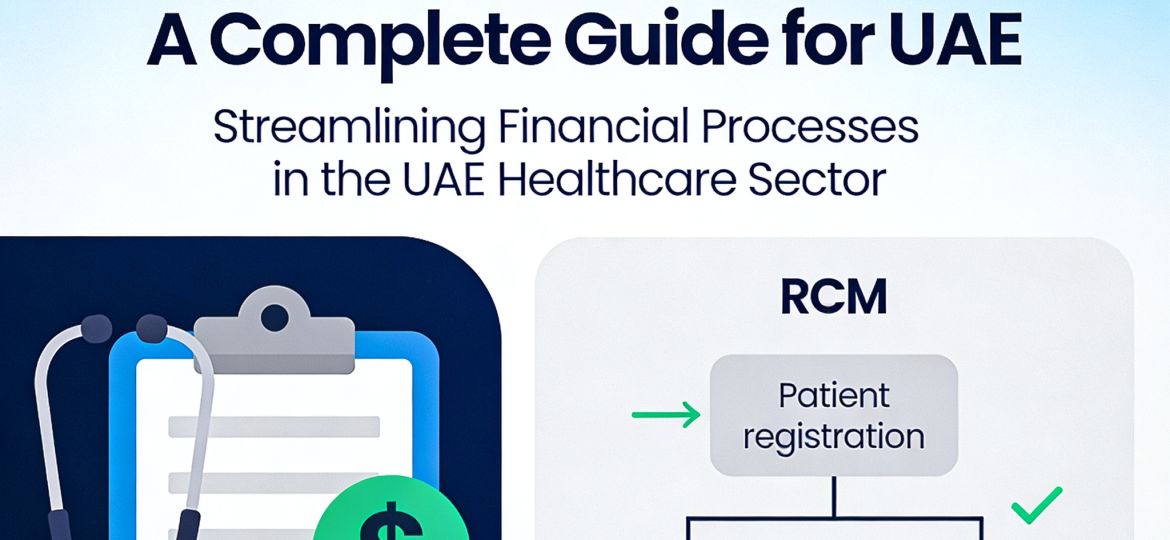
RCM UAE: Smarter Revenue Cycle Management for Healthcare Providers
Manage patient billing, insurance workflows, claims, payments and financial operations through a connected healthcare platform. Explore how Health Cluster supports revenue cycle management for hospitals, clinics and medical centers across the UAE.
From Understanding RCM to Choosing the Right Solution
Learn what revenue cycle management means, understand your facility’s requirements and evaluate the right software for your organization.
What Is RCM in Healthcare?
RCM stands for Revenue Cycle Management. It is the financial process healthcare organizations use to manage patient services from registration through billing, insurance claims and final payment.
What Does RCM Mean in a Hospital?
In a hospital, RCM connects patient registration, clinical services, medical coding, billing, insurance claims, payment collection and financial reporting.
It involves coordination between reception, clinical teams, billing, insurance and finance departments.
A structured RCM process helps providers track financial activities and identify issues that may affect payments.
Explore Revenue Cycle Management →The Core Stages of the Healthcare Revenue Cycle
Every stage contributes to the financial journey of a patient encounter, from initial registration to payment reconciliation.
Patient Registration
Collect patient information and verify insurance eligibility and coverage requirements.
Pre-Authorization
Record and track approvals required by insurance payers before selected services.
Charge Capture & Coding
Document services delivered and assign the applicable medical codes.
E-Claim Submission
Prepare and submit claim information through the applicable payer workflow.
Claims Follow-up
Monitor claim status and review rejected or denied claims for appropriate action.
Payment Posting
Record payments received from insurance payers and patients.
Reconciliation
Review invoices, claims, payments and outstanding balances.
Financial Reporting
Review collections, denials, outstanding claims and revenue cycle performance.
Who Needs RCM Software in the UAE?
RCM software can support healthcare organizations of different sizes and specialties that manage patient billing, insurance claims or service payments.
Multi-Specialty Hospitals
Manage complex billing, insurance claims and revenue across multiple departments.
Hospital RCMPrivate Hospitals
Organize billing accuracy, claims follow-up and payment collection workflows.
High PriorityMedical Centers
Manage outpatient billing, insurance workflows and financial records.
Medical Center RCMPolyclinics
Coordinate billing across multiple specialties, doctors and insurance arrangements.
Polyclinic RCMDental Clinics
Organize treatment plans, procedure billing, insurance coverage and patient payments.
Dental RCMDermatology & Aesthetic Clinics
Track packages, procedures, consumables, invoices and payments.
High PriorityDay Surgery Centers
Manage procedure-based billing, surgical charges and insurance claims.
Surgical BillingDiagnostic Laboratories
Handle test billing, payer claims and payment reconciliation.
Laboratory RCMRadiology Centers
Manage imaging services, charges, claims and payment records.
Imaging RCMHome Healthcare Providers
Manage home visits, service billing and reimbursement workflows.
Home Care RCMPhysiotherapy Centers
Track treatment sessions, packages, patient invoices and payments.
Therapy RCMWhich Healthcare Providers Should Prioritize RCM?
These five segments are strong starting points for healthcare RCM sales and marketing in the UAE.
Private Hospitals
Complex billing, insurance workflows and multiple departments require coordinated financial processes.
Multi-Specialty Medical Centers
Multiple doctors, specialties, facilities and insurance workflows create complex billing requirements.
Dermatology & Aesthetic Clinics
Packages, procedures, consumables and payment tracking need organized financial workflows.
Dental Clinics
Multiple treatment plans, insurance coverage and procedure-based billing need careful coordination.
Diagnostic & Radiology Centers
High-volume service billing, payer claims and payment reconciliation are key operational requirements.
What Features Should You Look for in RCM Software?
Evaluate how well the platform supports your complete revenue cycle rather than focusing only on invoice generation.
Patient Registration & Eligibility
Organize patient demographics, insurance details and eligibility verification workflows.
Charge Capture & Medical Coding
Connect documented services with applicable codes and billing workflows.
Claims Management
Prepare, submit, monitor and follow up on insurance claims.
Denial Management
Review rejected claims, identify issues and coordinate appropriate follow-up.
Patient Billing & Invoicing
Manage invoices, payments, patient balances and billing records.
Payment Posting & Reconciliation
Record payments and review outstanding balances and discrepancies.
RCM Reporting & Analytics
Review collection performance, claim status, denials and revenue trends.
EMR & HIS Connectivity
Evaluate how clinical documentation and financial workflows connect.
Security & Access Controls
Review permissions, audit trails and relevant data protection controls.
RCM Regulations and Healthcare Interoperability in UAE
Healthcare organizations should evaluate software against the applicable authority requirements, health information exchange workflows and security standards for their facility.
🇦🇪 Dubai — DHA & NABIDH
Dubai healthcare providers should review applicable DHA requirements and relevant NABIDH health information exchange workflows.
Explore NABIDH EMR →🇦🇪 Abu Dhabi — DoH & Malaffi
Providers in Abu Dhabi should assess Department of Health requirements and applicable Malaffi-related exchange workflows.
Explore Malaffi →🇦🇪 Northern Emirates — MOHAP & Riayati
Facilities should confirm relevant MOHAP requirements and Riayati workflows based on their location and applicable arrangements.
🔐 Healthcare Information Security
Review applicable privacy, security and information governance requirements, including ADHICS where relevant.
Explore ADHICS →🔗 HL7 Integration
HL7 is used to exchange clinical and administrative information between healthcare applications.
Explore HL7 →⚡ FHIR Interoperability
FHIR provides a modern framework for exchanging healthcare information through structured resources and APIs.
Explore FHIR →Note: Integration availability, approval requirements and regulatory scope depend on the healthcare facility, deployment and relevant authority. Confirm supported capabilities with the vendor.
Common Revenue Cycle Management Challenges
Disconnected workflows and incomplete information can create avoidable problems across billing, claims and financial operations.
Inaccurate codes can lead to claim rejection or payment delays.
Missing required approvals can affect the claims process.
Incorrect patient or insurance information can create billing problems.
Missing clinical information can affect claim preparation and review.
Unmonitored claims may remain unpaid for longer than expected.
Separate clinical and billing systems can create duplicate work.
How to Choose the Right RCM Software in UAE
Before selecting a platform, compare its capabilities with your organization’s actual billing, claims, clinical and financial requirements.
Evaluate Before You Invest
Use these questions when comparing RCM vendors. Ask each vendor to demonstrate your real workflows instead of relying only on a feature list.
Consider how the system will fit your existing teams, software and operational requirements.
Discuss Your Requirements →Connect Clinical and Financial Workflows with Health Cluster
Health Cluster provides a connected healthcare platform with EMR, HIS and Revenue Cycle Management capabilities.
Healthcare organizations can explore how patient registration, clinical documentation, service records, billing and financial workflows work together within the platform.
Its capabilities can be evaluated against the specific needs of private hospitals, medical centers, polyclinics and specialty clinics.
Explore Health Cluster RCM →Who Should You Contact About RCM Software?
When prospecting healthcare organizations, focus on decision-makers responsible for financial performance, billing, insurance and facility operations.
Target Job Titles
Use these roles to identify relevant contacts through LinkedIn Sales Navigator.
UAE Target Locations
Prioritize these Emirates when building your healthcare RCM prospect lists.
Segment your outreach by facility type and job title so your message addresses each prospect’s actual billing and financial workflows.
Looking for RCM Software for Your Healthcare Facility in UAE?
Discuss your facility type, insurance workflows, claims management requirements and financial operations with the Health Cluster team. Request a personalized demonstration of the platform.
RCM in Healthcare: Common Questions
Find answers to common questions about RCM meaning, hospital revenue cycle management and healthcare RCM software in UAE.
What does RCM stand for in healthcare?
RCM stands for Revenue Cycle Management. It refers to the financial processes healthcare organizations use to manage patient services from registration through billing, claims and final payment.
What is RCM in a hospital?
RCM in a hospital is the process of managing patient registration, insurance verification, service documentation, medical coding, claims submission, payment collection and financial reporting.
What is the full form of RCM in medical billing?
The full form of RCM is Revenue Cycle Management. In medical billing, it refers to the processes used to manage charges, insurance claims, payments and outstanding balances.
What is RCM software?
RCM software is a healthcare application that helps manage financial workflows such as patient billing, insurance eligibility, charge capture, claims processing, denial management and payment tracking.
Who needs RCM software in the UAE?
Private hospitals, multi-specialty medical centers, polyclinics, dental clinics, dermatology clinics, diagnostic laboratories, radiology centers and other healthcare providers that manage billing and insurance workflows can benefit from RCM software.
What are RCM services?
RCM services are activities that support healthcare organizations in managing their revenue cycle. They may include eligibility verification, medical coding, charge capture, claims processing, denial management, payment posting and reconciliation.
What is the role of an RCM department in a hospital?
An RCM department coordinates financial workflows related to patient services. Its responsibilities may include registration, insurance verification, coding, billing, claims follow-up, denial management and payment reconciliation.
Why is RCM important for clinics in Dubai and Abu Dhabi?
RCM helps clinics organize billing and insurance processes, monitor outstanding claims and improve financial visibility. Providers should also ensure their workflows align with the regulatory and payer requirements applicable to their facility.
How do I choose RCM software for my hospital?
Evaluate the platform’s billing, insurance, coding, claims, denial management, reporting, integration, security and scalability capabilities. Ask the vendor to demonstrate your actual hospital workflows before making a decision.
What is the difference between RCM and medical billing?
Medical billing is one part of Revenue Cycle Management. RCM covers the broader financial process, including patient registration, eligibility verification, charge capture, claims, payment posting, denial follow-up and reconciliation.
