

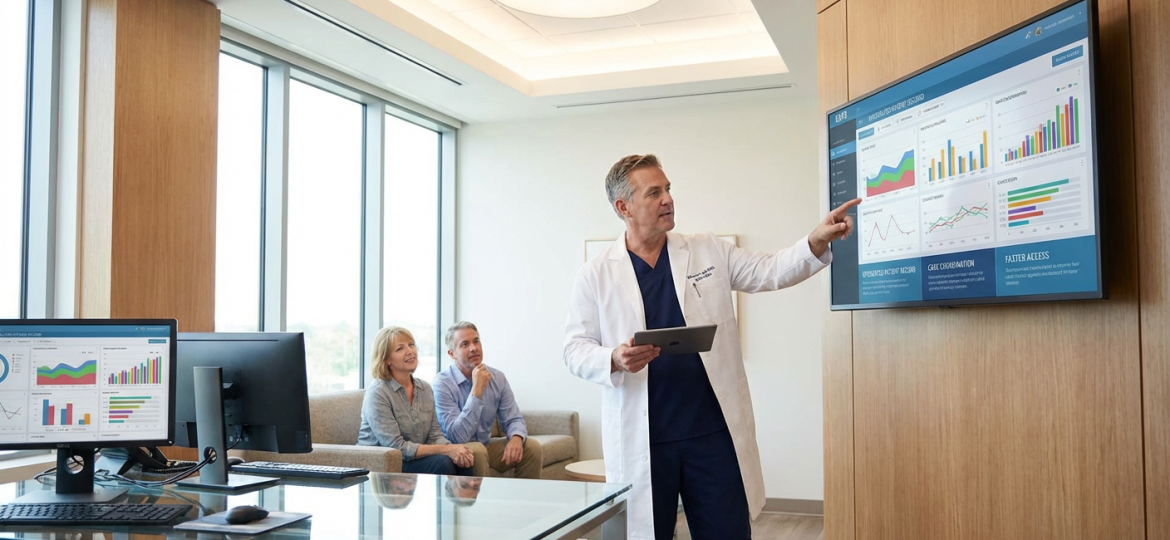
Healthcare is changing fast. Hospitals and clinics are moving from paper files to digital systems. This change is led by the Electronic Medical Record (EMR).
An EMR is a smart digital record. It replaces the old paper charts. It holds a patient’s full health story. This includes diagnoses, test results, and medicines.
The main idea behind using an EMR system is simple. We want to make patients healthier. We also want to make work easier for doctors and nurses. This is the dual advantage of EMR patient care. It is about getting better results for patients and better EMR efficiency for the clinic.
This article will show you how EMR improves patient care and efficiency. We will explore the many EMR benefits that are reshaping modern medicine.
What is EMR in Healthcare?
Before we talk about benefits, let us answer the question: What is EMR in healthcare?
EMR stands for Electronic Medical Record. Think of it as a patient’s digital folder. This folder lives inside one clinic or hospital. It is the official record of everything that happens there.
The EMR stores important details. It saves your medical history. It keeps track of your allergies and past surgeries. It notes all the treatments you have received.
It is different from an EHR. EHR stands for Electronic Health Record. An EHR is a bigger record that can be shared easily. It moves with the patient from one clinic to another. For now, we focus on the EMR and its power inside a single care setting.
EMR Improving Patient Care (Better Outcomes)
The biggest reason to use a digital system is to improve EMR patient care. When a doctor has all the facts, they can make smarter choices. This leads to much better patient outcomes.
Zero Mistakes with Real-Time Safety Checks
One major EMR benefit is safety. Paper records can be hard to read. A doctor’s handwriting might lead to a mistake in medicine dosage. An EMR fixes this problem.
- Allergy Alerts: If a doctor tries to order a drug that a patient is allergic to, the EMR immediately sends a loud alert. This prevents serious harm.
- Drug Interaction Checks: If a patient is taking three different medicines, the EMR checks if those drugs mix safely. It stops dangerous combinations.
- Correct Dosage: The system makes sure the dose of medicine is right for the patient’s age and weight.
This digital safety net is a huge part of EMR improving patient care. It makes sure the patient gets the right care, every single time.
Health Cluster’s EMR, for example, uses electronic prescriptions. This feature minimizes errors caused by handwriting, making the prescription process secure and efficient.
A Complete Story in One Place
Imagine visiting a new doctor. You have to fill out many long forms. You might forget to mention a surgery from ten years ago. This missing piece of information can affect your treatment.
The EMR solves this problem. It is a centralized system. It keeps all of the patient’s data in one location. This data includes lab reports, X-rays, and specialist notes.
How does EMR improve patient care?
When a doctor sees the full picture, they can diagnose faster. They can treat conditions with more confidence. They do not have to wait for old paper charts to be found. This immediate access is critical, especially in emergency cases.
The Health Cluster EMR functions as this centralized repository. It meticulously catalogs the patient’s complete medical history. This gives providers a holistic view. It helps them make well-informed decisions and provide customized care.
Better Care Coordination
Healthcare often involves a team. A patient might see a family doctor, a specialist, and a physical therapist. With paper, those providers do not talk easily.
The EMR allows them to share the same, updated record in real-time. This is essential for coordinated care.
- Seamless Hand-offs: When a patient moves from the ER to the hospital floor, the nurses and doctors all see the same current record.
- Team Alignment: Every member of the care team—from the consultant to the lab technician—can access and update the EMR. This ensures everyone is working toward the same goal.
This seamless data sharing is one of the clearest EMR benefits for patient care.
EMR Efficiency (Streamlining Operations)
Beyond safety, the EMR brings massive improvements to how a clinic works. This is what we mean by EMR efficiency. It saves time, reduces cost, and makes the clinic run smoothly.
The End of Paperwork
Paper records waste time. Staff spend hours filing, searching for, and moving charts. This takes time away from patients.
The EMR replaces this process with digital tools.
- Fast Documentation: Doctors and nurses use digital forms and templates. They can type notes quickly or even use voice-to-text.
- Order Entry: Physicians can order lab tests, scans, or medications directly through the system. This is called computerized provider order entry (CPOE). It is much faster than writing an order on paper and having a nurse process it later.
This streamlining of the workflow is a key answer to how EMR improves patient care and efficiency. It gives valuable time back to the provider.
For instance, Health Cluster EMR streamlines the nurses’ workflow. Nurses can effortlessly document vital signs and update medical records on a user-friendly platform. By minimizing paperwork, the system promotes a patient-centric approach.
Faster Patient Registration
The process starts as soon as a patient arrives. Old registration involved clipboards and long forms.
Health Cluster’s EMR shows how digital tools revolutionize this. Their user-friendly registration process allows patients to input essential details quickly.
- Reduced Wait Times: Patients can often fill out forms online before they even arrive at the clinic.
- Fewer Data Errors: Digital forms include checks and mandatory fields, making sure no important information is missed.
- Quick Check-in: Since the data is already in the system, the front desk staff can check the patient in quickly. This boosts EMR efficiency for the whole clinic.
Anywhere, Anytime Access (Telehealth)
Modern healthcare is not always in the clinic. Telehealth and mobile apps have changed where care happens.
A cloud-based EMR allows doctors to access patient files securely from home, a hospital, or even when traveling.
- Remote Consultations: Providers can conduct virtual check-ups and follow-up appointments using the EMR data.
- Mobile App Feature: Health Cluster’s mobile access feature allows healthcare providers to access patient records on the go. This means they can make informed decisions quickly, no matter their location.
The ability to access data remotely enhances EMR efficiency and provides greater convenience to the patient.
Empowering Patients Through Digital Access
EMR patient care is not just about the doctors. It is also about the patient. When patients are involved, they take better care of themselves. This improves outcomes.
Patient Portals: Your Health Dashboard
A key EMR benefit is the patient portal. This is a secure app where patients can log in. The portal gives patients direct access to their own electronic patient record.
With a patient portal, you can:
- View Results: See lab results and test reports as soon as they are ready.
- Communicate: Send secure messages to your doctor’s office with quick questions.
- Manage Health: Track prescriptions, confirm medication details, and manage allergy records.
- Schedule: Book or change appointments without needing to call the office.
Health Cluster allows patient portals. These tools foster a true partnership between the patient and the care team. This is a vital part of EMR improving patient care. It puts the patient in control.
Better Health Management
When patients can easily see their history, they are more likely to stick to their care plan.
For example, a patient with diabetes can see their blood sugar readings over the last six months in a clear chart. This visual data is often more powerful than just being told that their numbers are high. It motivates them to make the needed lifestyle changes. This moves care from reactive (treating sickness) to proactive (preventing sickness).
Health Cluster EMR: A Focus on Regional Excellence
For Health Cluster, the EMR patient care experience is built on local needs and global standards. Their system is designed to provide maximum EMR benefits while ensuring security.
Ensuring Security and Trust
One of the biggest concerns with digital records is safety. Patients must trust that their sensitive data is private.
The Health Cluster EMR uses strong security protocols. It includes encryption and strict access controls. Only people who need to see the information can access it.
Furthermore, Health Cluster ensures compliance with important regional standards:
- NABIDH and Malaffi: These are health information exchange systems. Compliance means that the EMR can talk securely with other authorized healthcare entities in the UAE region. This smooth interoperability is a huge boost to coordinated EMR patient care.
This focus on data security gives both providers and patients peace of mind.
Tailored Workflow for Staff
Health Cluster’s solutions focus heavily on provider ease-of-use. A system that is hard to use lowers EMR efficiency. A user-friendly system, however, boosts it.
Features like simplified patient registration and organized consultant’s reports are key. They are designed to match the real-world workflow of the medical team. This approach reduces “click fatigue” and makes sure doctors spend more time looking at the patient, not the screen.
Conclusion
The move to EMR systems is the most important step in modern healthcare. The old way of paper records is slow, prone to errors, and limits collaboration.
The modern EMR patient care system, like the one offered by Health Cluster, provides an advantage that is impossible to ignore.
It ensures improved patient care by:
- Giving doctors a complete, error-free view of the patient’s history.
- Using smart alerts to prevent medical mistakes.
- Allowing patients to view their own health files right away.
It also achieves superior streamlining efficiency by:
- Eliminating slow, manual paperwork.
- Speeding up registration and administrative tasks.
- Allowing flexible, remote access through mobile and telehealth tools.
In short, the answer to how EMR improves patient care and efficiency is through accurate data, instant access, and powerful automation. The EMR benefits for both clinics and communities are clear and continue to grow.
Are you ready to give your patients safer, more efficient care?
Contact Health Cluster today to schedule a demo and see the Health Cluster EMR in action!
