

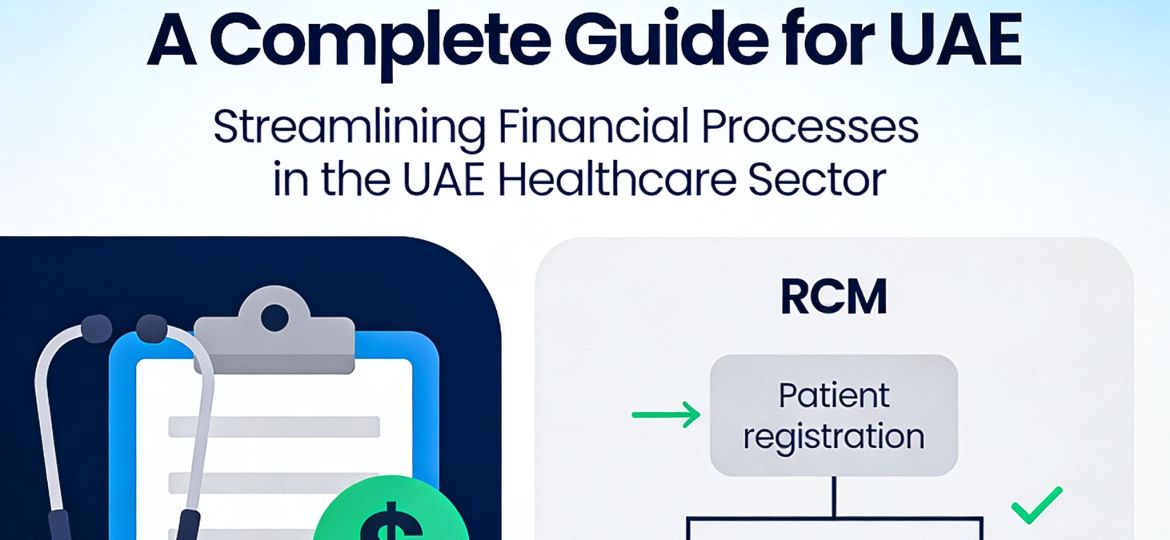
Maintaining a steady flow of money is vital for any medical center. In the United Arab Emirates, this process is known as revenue cycle management or RCM. It covers everything from the moment a patient books a visit to the final payment for the services. For healthcare providers in Dubai, Abu Dhabi, and Sharjah, mastering the revenue cycle is the key to staying open and growing.
At Health Cluster, we specialize in providing advanced RCM services and RCM software for hospitals UAE needs to thrive. This guide will explain what RCM in healthcare is and how it works within the local regulatory landscape.
What Is RCM in Healthcare?
RCM stands for revenue cycle management. It is a financial process that facilities use to track patient care episodes from registration to final payment. In simple terms, it is how a clinic or hospital manages its bills and gets paid by insurance companies or patients.
In the UAE, RCM is more than just a billing task. It is a complex system that must follow strict laws. Whether you are looking for RCM software for clinics or RCM services for polyclinics, the goal is always the same: to ensure every service provided is paid for accurately and on time.
The Core Stages of the UAE Revenue Cycle
The journey of a medical claim has many steps. If one step fails, the whole cycle breaks. This leads to revenue leakage in clinics, where money is lost due to small errors.
Patient Registration & Eligibility Verification
The cycle starts before the doctor sees the patient. Staff must collect accurate data during patient registration & eligibility verification. In the UAE, this means checking if the patient’s insurance (like Daman, NextCare, or AXA) is active. It also involves confirming what services the plan covers.
Charge Capture and Medical Coding
After the consultation, the doctor records the services. This is called charge capture. These services are then turned into universal medical codes. Medical coding and billing in the UAE use specific standards like ICD-10-CM and CPT codes. If the coding is wrong, the insurance company will likely reject the claim.
E-Claim Management UAE
In the Emirates, almost all claims are digital. This is known as e-claim management UAE. The RCM software sends the coded claim to the insurance payer through a secure portal. High-quality RCM software for medical centers ensures these files are formatted correctly to meet local standards.
Regulatory Compliance in the Emirates
The UAE has some of the most advanced healthcare regulations in the world. Any RCM UAE strategy must align with these authorities.
- DHA compliance: If you operate in Dubai, you must follow DHA compliance rules. This includes using the Nabidh system for exchanging health records.
- DoH Abu Dhabi: In the capital, the Department of Health sets the rules. Providers must be integrated with Malaffi, the central health information exchange.
- MOHAP standards: The Ministry of Health and Prevention sets MOHAP regulations for the Northern Emirates, like Sharjah and Ajman. They also manage the Riayati platform.
- ADHICS standards: These are the Abu Dhabi Healthcare Information and Cyber Security standards. They ensure that all patient data handled during RCM services is kept safe and private.
Why Your Facility Needs Specialized RCM Software
Using generic billing tools is a risk. Professional RCM software is built to handle the unique needs of the Middle East market.
Malaffi and Nabidh Integration
Your software must “talk” to the national systems. Health Cluster offers Malaffi and Nabidh integration as a core feature. This allows for a seamless flow of data between your clinic and the government databases. This connectivity is essential for DHA & DOH compliance.
Claims Management and Denial Management
A big part of RCM is handling “denied” claims. This is where denial management comes in. If an insurance company refuses to pay, the software helps you find the error and fix it quickly. Effective claims management reduces the time it takes to get your money back.
Technical Standards: FHIR and HL7
To share data safely, systems use special languages. You might hear these called FHIR and HL7.
- HL7: This is an older, widely used standard for moving clinical and administrative data between software applications.
- FHIR: This stands for Fast Healthcare Interoperability Resources. It is the modern way to share data. It works well with mobile apps and cloud systems.
Most RCM software for hospitals UAE providers use today must support these standards to ensure the medical center can communicate with laboratories and pharmacies.
Common Challenges in UAE RCM
Even with the best tools, problems can arise. Understanding these helps you stay prepared.
- Incorrect coding: Using the wrong ICD-10 code is a leading cause of claim rejections.
- Missed authorizations: Some procedures need approval from the insurance company before they happen.
- Data entry errors: A simple typo in a patient’s ID number can stop a payment.
- Slow follow-ups: If you do not track your unpaid bills, they can expire.
At Health Cluster, our RCM services focus on fixing these issues. We use automation to catch errors before the claim is sent. This protects your facility from revenue leakage in clinics.
The Benefits of Optimized RCM
When your revenue cycle management is healthy, your whole clinic performs better.
- Better cash flow: You get paid faster, which means you can pay your staff and buy better equipment.
- Happier patients: When billing is clear and insurance is verified quickly, patients have a better experience.
- Legal safety: Staying compliant with MOHAP standards and DHA compliance keeps you out of legal trouble and avoids fines.
- Less stress for staff: Automated RCM software takes the heavy lifting off your reception and billing teams.
How Health Cluster Can Help
We understand the UAE healthcare market. Health Cluster provides a complete platform that acts as both an EMR and an RCM tool. Our RCM software for clinics is designed to be simple. It helps you manage patient registration & eligibility verification and charge capture with just a few clicks.
Our solutions are fully localized. This means we include Malaffi and Nabidh integration right out of the box. Whether you are a small clinic in Sharjah or a large hospital in Abu Dhabi, our team is here to support your growth.
Conclusion
RCM in healthcare is the lifeblood of your medical practice. From the first phone call to the final reimbursement, every step matters. By using the right RCM UAE strategies and compliant RCM software, you can focus on what you do best: taking care of your patients.
Do not let complicated billing slow you down. Ensure your facility is ready for the future of digital health in the UAE.
Book a free demo and see our RCM services in action.
