

Healthcare has changed dramatically over the last decade. Hospitals, clinics, and healthcare providers are moving away from paper files and adopting digital solutions that improve efficiency, patient safety, and care quality.
At the center of this transformation are smart health records.
Smart health records allow healthcare organizations to collect, manage, share, and analyze patient information in real time. They provide healthcare professionals with instant access to accurate patient data, helping them make informed decisions and deliver better care.
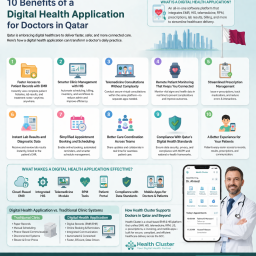
Modern Electronic Medical Records (EMR) systems have become the foundation of smart healthcare. They support everything from patient registration and clinical documentation to telemedicine integration, healthcare interoperability, and regulatory compliance.
As healthcare systems across Saudi Arabia, the UAE, and the wider GCC continue their digital transformation journey, smart health records are becoming essential for delivering connected and patient-centered care.
What Are Smart Health Records?
Smart health records are digital patient records that go beyond traditional documentation. They store, organize, and share healthcare information securely while supporting advanced technologies and automated workflows.
Unlike paper-based records, smart health records can be accessed instantly by authorized healthcare providers. They can also connect with other healthcare systems, helping organizations create a unified patient journey.
A smart health record may include:
- Patient demographics
Basic information such as name, age, contact details, and insurance information. - Medical history
Previous illnesses, surgeries, allergies, and family health history. - Clinical documentation
Doctor notes, diagnoses, treatment plans, and progress records. - Laboratory results
Blood tests, pathology reports, and diagnostic findings. - Medical imaging records
X-rays, CT scans, MRI results, and radiology reports. - Medication history
Prescriptions, medication administration records, and treatment adherence. - Patient health information
Vital signs, chronic disease management data, and ongoing care records.
These digital health records create a complete picture of a patient’s health journey.
What Is an Electronic Medical Record (EMR)?
An Electronic Medical Record (EMR) is a digital version of a patient’s medical chart maintained by a healthcare provider.
An EMR system replaces paper records and allows healthcare professionals to document, retrieve, and manage patient information electronically.
Modern EMR software supports:
- Clinical documentation
- Appointment scheduling
- Electronic prescribing
- Laboratory integration
- Billing and claims management
- Patient record management
- Telemedicine integration
- Reporting and analytics
An EMR system improves workflow efficiency while reducing administrative burdens for healthcare providers.
What Is the Difference Between EMR and EHR?
Many people use EMR and EHR interchangeably. However, there are important differences.
EMR (Electronic Medical Record)
An EMR contains patient information within a specific healthcare organization.
It focuses on:
- Clinical documentation
- Treatment history
- Internal patient management
- Provider-specific records
EHR (Electronic Health Record)
An Electronic Health Record (EHR) is designed for broader healthcare data sharing.
An EHR system supports:
- Multi-provider collaboration
- Cross-facility patient records
- Longitudinal patient records
- Health information exchange
- Connected healthcare ecosystems
While EMRs are primarily used within a healthcare facility, EHRs enable information sharing across healthcare networks.
Both systems play a critical role in building smart healthcare environments.
How Smart Health Records Improve Patient Care
Patient care improves when healthcare professionals have access to complete and accurate information.
Smart health records support better clinical decisions by providing real-time patient data.
Faster Access to Information
Doctors no longer need to search through paper files.
Patient records can be accessed instantly from any authorized workstation or mobile device.
Improved Care Coordination
Healthcare teams can work together more effectively.
Specialists, nurses, pharmacists, and primary care providers can review the same patient information and collaborate on treatment plans.
Reduced Medical Errors
Digital medical records help reduce common errors caused by:
- Illegible handwriting
- Missing documentation
- Duplicate records
- Incorrect medication prescriptions
Better Chronic Disease Management
Patients with chronic conditions require ongoing monitoring.
Smart health records provide healthcare providers with complete treatment histories, helping them track progress and adjust care plans when needed.
Enhanced Patient Safety
Clinical alerts can notify providers about:
- Drug interactions
- Allergies
- Duplicate medications
- Abnormal laboratory results
This improves patient safety and treatment outcomes.
Benefits of Electronic Medical Records
The adoption of electronic medical records offers significant benefits for healthcare organizations.
Improved Efficiency
Administrative tasks become faster and more accurate.
Staff spend less time searching for records and more time supporting patients.
Better Clinical Documentation
EMR software standardizes documentation processes and improves record accuracy.
Cost Savings
Organizations can reduce expenses associated with:
- Paper records
- Physical storage
- Manual data entry
- Administrative inefficiencies
Faster Decision-Making
Healthcare providers gain immediate access to patient information, improving diagnosis and treatment planning.
Stronger Regulatory Compliance
Digital healthcare solutions help healthcare organizations comply with local and international healthcare regulations.
How EMR Systems Improve Healthcare Efficiency
Healthcare organizations face increasing pressure to deliver quality care while managing costs.
EMR systems streamline clinical and operational workflows.
Appointment Management
Integrated scheduling systems reduce missed appointments and improve patient flow.
Automated Documentation
Templates and structured workflows accelerate clinical documentation.
Integrated Billing
Healthcare providers can connect clinical services with billing workflows, reducing claim errors and improving revenue cycle performance.
Reporting and Analytics
Healthcare organizations can monitor:
- Patient volumes
- Clinical performance
- Resource utilization
- Operational efficiency
These insights support better decision-making.
Key Features of a Modern EMR System
A modern cloud-based EMR should provide more than basic record-keeping.
Clinical Documentation
Healthcare providers need flexible documentation tools that support various specialties and workflows.
Electronic Prescribing
Digital prescribing improves medication management and patient safety.
Telemedicine Integration
Integrated telehealth capabilities allow providers to conduct virtual consultations and manage remote care.
Healthcare Interoperability
Support for standards such as FHIR and HL7 enables seamless data exchange between systems.
Mobile Accessibility
Providers increasingly require secure access through smartphones and tablets.
Analytics and Dashboards
Real-time reporting helps organizations monitor performance and identify improvement opportunities.
Remote Patient Monitoring
Remote Patient Monitoring enables healthcare providers to collect patient data outside traditional clinical settings.
This supports proactive care management and better patient engagement.
Can EMR Systems Integrate with Telemedicine?
Yes.
Telemedicine integration is becoming a critical requirement for healthcare providers.
A connected EMR system allows healthcare professionals to:
- Schedule virtual consultations
- Access patient records during visits
- Document encounters electronically
- Issue prescriptions remotely
- Order laboratory tests online
Integrated telehealth solutions improve patient access while maintaining continuity of care.
This is particularly valuable for rural populations, chronic disease management, and post-discharge follow-up.
Are Electronic Medical Records Secure?
Security remains one of the most important concerns in digital healthcare.
Modern EMR software incorporates multiple layers of protection.
Data Encryption
Sensitive patient information is encrypted during transmission and storage.
Role-Based Access Control
Users only access information relevant to their responsibilities.
Audit Trails
Every action performed within the system is recorded for accountability and compliance purposes.
Backup and Disaster Recovery
Cloud-based EMR systems often include automated backup and recovery capabilities.
Regulatory Compliance
Healthcare organizations can maintain compliance with data privacy and healthcare regulations through secure system architecture and governance controls.
Healthcare Interoperability and Connected Healthcare
Healthcare interoperability is essential for creating smart health records.
Interoperability allows healthcare systems to exchange and interpret patient data accurately.
Without interoperability, patient information remains fragmented across different organizations.
HL7 Integration
HL7 provides standards that enable healthcare applications to communicate effectively.
FHIR Integration
FHIR supports modern API-based healthcare data exchange.
It enables faster integration between healthcare applications, mobile solutions, and patient portals.
Benefits of Interoperability
Organizations gain:
- Better care coordination
- Reduced duplicate testing
- Improved patient experiences
- Faster access to critical information
Connected healthcare ecosystems rely on interoperability to support seamless care delivery.
Smart Health Records in Saudi Arabia and the UAE
Saudi Arabia and the UAE are among the leading countries driving healthcare digital transformation.
Government initiatives continue to encourage the adoption of advanced digital healthcare technologies.
EMR Saudi Arabia
Healthcare providers in Saudi Arabia increasingly require solutions that support:
- NPHIES Integration
- Healthcare interoperability
- Digital claims processing
- National healthcare transformation initiatives
EMR UAE
Healthcare organizations in the UAE are focusing on:
- NABIDH Integration
- Malaffi Integration
- Riayati Integration
- Connected healthcare networks
Healthcare providers must ensure their digital medical records systems can support these national initiatives.
How EMR Systems Support Healthcare Compliance in Saudi Arabia and the UAE
Compliance is a critical requirement for healthcare organizations.
Modern EMR systems help organizations meet regulatory standards while improving operational efficiency.
NPHIES Integration
Saudi healthcare providers increasingly require NPHIES-compliant systems for insurance claims and healthcare data exchange.
ZATCA Compliance
Healthcare organizations must also support electronic invoicing requirements and digital tax regulations.
NABIDH Integration
Healthcare facilities in Dubai need systems capable of connecting with the NABIDH platform.
Malaffi Integration
Healthcare providers in Abu Dhabi benefit from secure health information exchange through Malaffi.
Riayati Integration
Riayati supports national healthcare interoperability across the UAE.
These integrations strengthen healthcare collaboration and improve patient outcomes.
Why Healthcare Organizations Need Smart Health Records
Healthcare is becoming increasingly connected, data-driven, and patient-focused.
Organizations that continue to rely on paper-based processes face growing operational challenges.
Smart health records provide a foundation for:
- Better patient outcomes
- Improved healthcare efficiency
- Enhanced collaboration
- Regulatory compliance
- Digital healthcare innovation
A modern EMR system is no longer a luxury. It is a strategic necessity for healthcare providers seeking long-term success.
Conclusion
Smart health records are transforming the way healthcare organizations deliver care, manage information, and improve patient outcomes.
Through Electronic Medical Records, healthcare providers can streamline workflows, improve clinical documentation, strengthen healthcare interoperability, and support connected healthcare environments.
As healthcare systems in Saudi Arabia, the UAE, and across the GCC continue their digital transformation journeys, the demand for secure, interoperable, and cloud-based EMR solutions will continue to grow.
Health Cluster helps healthcare organizations modernize operations with advanced EMR software, Hospital Information System capabilities, telemedicine integration, Remote Patient Monitoring, and compliance-ready solutions designed for regional healthcare requirements.
If you are looking to improve patient care, enhance operational efficiency, and accelerate your healthcare digital transformation journey, contact Health Cluster today to discover how our smart health records and EMR solutions can support your organization’s success.