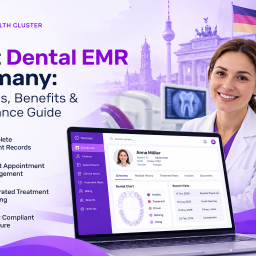

Germany has one of the most advanced healthcare systems in Europe. Hospitals and healthcare providers are rapidly adopting digital technologies to improve patient care, streamline operations, and meet strict national regulations. A modern Hospital Information System Germany solution helps healthcare organizations manage clinical, administrative, and financial processes from a single platform.
Today, hospitals require more than just patient record management. They need a complete digital ecosystem that supports Electronic Medical Records Germany, Electronic Health Records Germany, laboratory management, pharmacy operations, medical billing, reporting, and secure data exchange. At the same time, healthcare providers must comply with Germany’s digital health framework, including Gematik Compliant Software, Telematikinfrastruktur (TI), ePA Integration Germany, eRezept Integration Germany, KIM Integration Germany, and HL7 FHIR Germany standards.
Whether you operate a private hospital, university hospital, specialty clinic, or healthcare network, selecting the right Hospital Information System Germany can improve patient safety, increase operational efficiency, and prepare your organization for the future of digital healthcare.
In this guide, we explain how a Hospital Information System (HIS) works, its key features, compliance requirements, implementation process, and why Health Cluster is an ideal technology partner for German healthcare providers.
What is a Hospital Information System?
A Hospital Information System (HIS) is a complete software platform that manages the day-to-day operations of hospitals and healthcare facilities.
In Germany, this solution is also commonly referred to as a Krankenhausinformationssystem (KIS) Germany. It connects departments, healthcare professionals, and patients through a centralized digital platform.
Instead of using separate systems for registration, billing, laboratories, pharmacies, and medical records, a Hospital Information System brings everything together in one secure solution.
A modern Healthcare Information System Germany typically includes:
- Electronic Medical Records (EMR): Stores patient history, diagnoses, medications, allergies, and treatment plans.
- Electronic Health Records (EHR): Enables secure sharing of patient information across healthcare organizations.
- Laboratory Information System (LIS): Manages laboratory requests, sample tracking, and result reporting.
- Radiology Information System (RIS) and PACS: Organizes imaging workflows and diagnostic reports.
- Hospital ERP: Supports finance, procurement, inventory, payroll, and human resources.
- Revenue Cycle Management: Streamlines billing, insurance claims, and payment tracking.
By integrating these functions, hospitals can improve clinical workflows, reduce manual work, and provide better patient care.
Why Do Hospitals in Germany Need a Modern Hospital Information System?
Healthcare is becoming more connected every year. Hospitals must manage increasing patient volumes while maintaining high standards of care and complying with national regulations.
A modern Hospital Management Software Germany solution helps healthcare providers address these challenges.
Some of the biggest benefits include:
Better Patient Care
Doctors, nurses, and specialists can instantly access digital patient records, reducing delays and improving treatment decisions.
Improved Clinical Workflow
Digital documentation, electronic prescribing, appointment scheduling, and automated workflows reduce paperwork and administrative burden.
Faster Decision Making
Real-time dashboards and hospital analytics help administrators monitor performance, patient flow, and resource utilization.
Stronger Data Security
Modern Medical Software Germany includes user permissions, audit trails, encryption, and secure authentication to protect sensitive health information.
Regulatory Compliance
Hospitals can meet Germany’s healthcare standards through Gematik Integration, Telematikinfrastruktur (TI) Software, KBV Certified Software, and secure healthcare interoperability.
Lower Operating Costs
Automation reduces repetitive tasks, minimizes errors, and improves resource allocation throughout the hospital.
How Does a Hospital Information System Work in Germany?
A Hospital Information System Germany connects every department through a centralized database.
When a patient visits the hospital, the information flows through each department without duplication.
The process usually looks like this:
- Patient registration creates a digital profile.
- Appointment scheduling assigns consultations.
- Doctors document examinations in the Hospital EMR.
- Laboratory and radiology requests are sent electronically.
- Results automatically return to the patient’s record.
- Pharmacy receives digital prescriptions.
- Billing processes insurance claims and patient payments.
- Hospital management dashboards update in real time.
This connected workflow improves communication between departments and reduces manual data entry.
Core Components of a Hospital Information System Germany
A comprehensive Digital Hospital Software Germany solution includes several integrated modules that support both clinical and administrative operations.
Electronic Medical Records (EMR Software Germany)
An EMR Software Germany solution stores complete patient medical records digitally.
Doctors can view:
- Medical history
- Allergies
- Medications
- Diagnoses
- Clinical notes
- Laboratory results
- Radiology reports
- Treatment plans
This allows clinicians to make informed decisions quickly while reducing paperwork.
Electronic Health Records (EHR Software Germany)
While EMR focuses on records within a single healthcare organization, Electronic Health Records Germany support information sharing across authorized healthcare providers.
A secure Hospital EHR Germany improves continuity of care by allowing different providers to access relevant patient information when permitted.
Laboratory Information System (LIS Software Germany)
A Laboratory Information System Germany automates laboratory operations from sample collection to final reporting.
Key capabilities include:
- Electronic test orders
- Barcode-based specimen tracking
- Automated analyzer integration
- Quality control management
- Digital laboratory reporting
An integrated LIS Software Germany significantly reduces manual errors and shortens turnaround times.
RIS and PACS Integration
Radiology departments generate large volumes of imaging data every day.
A Hospital Information System integrates RIS PACS Germany solutions to manage:
- Imaging requests
- Scheduling
- Radiology reports
- Digital image storage
- Image sharing across departments
This ensures faster diagnosis and better collaboration between clinicians.
Hospital ERP
Modern hospitals require much more than clinical software.
A Hospital ERP Germany manages essential business operations such as:
- Procurement
- Finance
- Inventory
- Payroll
- Human resources
- Asset management
- Vendor management
Integrating ERP with clinical systems eliminates duplicate work and improves operational efficiency.
Pharmacy Management Software
Medication safety is a critical part of patient care.
Integrated Pharmacy Management Software Germany supports:
- Electronic prescriptions
- Medication dispensing
- Drug inventory
- Stock management
- Expiry tracking
- Drug interaction alerts
This helps reduce medication errors while improving pharmacy efficiency.
Revenue Cycle Management
Financial sustainability is essential for every healthcare organization.
Integrated Revenue Cycle Management Germany solutions automate:
- Patient billing
- Insurance claims
- Payment tracking
- Revenue reporting
- Financial analytics
Automated billing processes reduce claim errors and improve cash flow.
Essential Features of the Best Hospital Information System Germany
The Best Hospital Information System Germany should offer more than digital record keeping. It should provide a complete platform for managing every aspect of hospital operations.
Key features include:
Patient Registration Software
Quick patient onboarding with demographic information, insurance details, and unique patient identifiers.
Appointment Scheduling Software
Smart scheduling reduces waiting times and improves physician productivity.
Electronic Documentation
Doctors and nurses can record patient information digitally instead of relying on paper records.
Admission, Discharge and Transfer (ADT)
The Admission Discharge Transfer (ADT) module manages patient movement across departments while maintaining accurate records.
Clinical Decision Support System
A built-in Clinical Decision Support System assists clinicians with treatment recommendations, medication safety checks, allergy alerts, and evidence-based clinical guidance.
CPOE and eMAR
Computerized Physician Order Entry (CPOE) allows doctors to submit laboratory, radiology, and medication orders electronically.
Electronic Medication Administration Records (eMAR) help nursing staff administer medications safely and accurately.
Patient Portal
A secure Patient Portal Germany allows patients to:
- View appointments
- Access medical records
- Download reports
- Communicate securely with providers
- Manage prescriptions
Doctor Mobile App
Healthcare professionals increasingly require access to patient information from anywhere.
A Doctor Mobile App Germany enables clinicians to review patient records, approve orders, and monitor care while remaining connected to the hospital system.
Germany’s Digital Healthcare Landscape
Germany is transforming its healthcare system through digital innovation. Hospitals are moving from paper records and disconnected systems to fully integrated digital platforms. This shift improves patient care, strengthens data security, and supports better collaboration across the healthcare ecosystem.
Today, every Hospital Information System Germany should support national digital health initiatives while providing secure and efficient healthcare services.
A modern Healthcare IT Germany solution should not only manage hospital operations but also enable seamless communication between hospitals, clinics, laboratories, pharmacies, and insurance providers.
Understanding Krankenhausinformationssystem (KIS) Germany
In Germany, a Hospital Information System is commonly known as a Krankenhausinformationssystem (KIS) Germany.
A KIS acts as the central digital platform for hospitals. It connects every department through a single database and allows healthcare professionals to access accurate patient information in real time.
A modern Krankenhaus Software Deutschland solution typically integrates:
- Electronic Medical Records (EMR)
- Electronic Health Records (EHR)
- Laboratory Information Systems (LIS)
- Radiology Information Systems (RIS)
- Picture Archiving and Communication Systems (PACS)
- Pharmacy Management
- Billing and Revenue Cycle Management
- Inventory and Procurement
- Human Resource Management
- Business Intelligence and Reporting
Instead of using multiple disconnected applications, hospitals can operate from one secure and intelligent platform.
What is Praxisverwaltungssystem (PVS) Germany?
While hospitals use a Krankenhausinformationssystem (KIS), many private clinics and physician practices use a Praxisverwaltungssystem (PVS) Germany.
A PVS focuses on managing outpatient clinics and medical practices. It typically includes:
- Patient registration
- Appointment scheduling
- Clinical documentation
- Electronic prescribing
- Medical billing
- Insurance management
Many healthcare organizations use both KIS and PVS solutions to support different care settings while sharing patient information securely.
Why Gematik Compliance Matters
One of the most important factors when choosing a Hospital Information System Germany is compliance with Germany’s national digital health infrastructure.
Gematik is responsible for developing standards that enable secure digital communication across the healthcare system.
A Gematik Compliant Software solution ensures that hospitals can exchange healthcare information safely while meeting national interoperability standards.
Benefits of Gematik Integration include:
- Secure exchange of patient information
- Standardized digital communication
- Improved healthcare interoperability
- Better patient experience
- Future-ready healthcare infrastructure
- Compliance with national healthcare regulations
Hospitals investing in new software should prioritize Gematik Compliant Healthcare Software to support long-term digital transformation.
What is Telematikinfrastruktur (TI)?
The Telematikinfrastruktur (TI) is Germany’s secure digital healthcare network.
It connects hospitals, clinics, pharmacies, laboratories, and healthcare professionals through a protected communication infrastructure.
A modern Telematikinfrastruktur (TI) Software solution allows healthcare organizations to exchange medical information safely while protecting patient privacy.
When selecting a Hospital Information System compliant with Gematik, ensure it supports TI (Telematikinfrastruktur) Compliant Healthcare Software requirements.
Key benefits include:
- Secure communication
- Digital healthcare services
- Faster information exchange
- Improved collaboration
- Enhanced patient safety
Without proper TI Compliant Software, hospitals may face challenges integrating with Germany’s evolving digital healthcare ecosystem.
Why TI Compliant EMR is Important
An TI Compliant EMR allows patient records to move securely across authorized healthcare providers.
Instead of relying on paper documents or manual transfers, physicians can access up-to-date patient information whenever permission has been granted.
Benefits include:
- Better continuity of care
- Fewer duplicate tests
- Faster diagnosis
- Improved treatment planning
- Reduced administrative work
As Germany continues expanding digital healthcare services, TI Compliant EMR solutions are becoming increasingly valuable.
ePA Integration Germany
The Elektronische Patientenakte (ePA) is Germany’s electronic patient record.
It gives patients greater control over their health information while enabling authorized healthcare providers to access relevant medical data.
A Hospital Information System with ePA integration helps hospitals:
- Access patient medical history
- Review previous treatments
- Share clinical documents securely
- Improve continuity of care
- Reduce unnecessary duplicate examinations
Healthcare providers should prioritize ePA Integration Germany when selecting new hospital software.
eRezept Integration Germany
Germany is expanding the use of electronic prescriptions through eRezept.
Instead of handwritten prescriptions, doctors issue digital prescriptions that can be processed electronically by pharmacies.
A Hospital Information System with eRezept provides several advantages:
- Faster prescription processing
- Reduced prescription errors
- Better medication safety
- Improved patient convenience
- Secure prescription tracking
Integrated eRezept Integration Germany also improves communication between physicians and pharmacies.
KIM Integration Germany
Kommunikation im Medizinwesen (KIM) is Germany’s secure healthcare messaging service.
It allows healthcare providers to exchange confidential medical documents through encrypted communication channels.
A Hospital Information System with KIM Integration Germany enables:
- Secure document exchange
- Electronic referrals
- Digital discharge summaries
- Laboratory result sharing
- Secure communication with healthcare partners
KIM plays a critical role in Germany’s connected healthcare environment.
KBV Certified Software
Healthcare providers often look for KBV Certified Software because it meets technical requirements established by the National Association of Statutory Health Insurance Physicians.
Choosing software that supports KBV requirements helps healthcare organizations:
- Improve interoperability
- Simplify regulatory compliance
- Support standardized healthcare workflows
- Enable reliable digital communication
When evaluating Hospital Software Germany, KBV compatibility is an important consideration.
HL7 FHIR Germany and Healthcare Interoperability
Modern hospitals rarely operate in isolation.
Patient information must move securely between hospitals, clinics, laboratories, pharmacies, insurance providers, and public health organizations.
This is where HL7 FHIR Germany becomes essential.
FHIR (Fast Healthcare Interoperability Resources) is an international standard that simplifies healthcare data exchange.
A Hospital Information System supporting FHIR Interoperability Germany allows different systems to communicate using standardized formats.
Benefits include:
- Faster information exchange
- Better clinical collaboration
- Reduced duplicate data entry
- Improved patient safety
- Easier integration with third-party healthcare applications
Strong Healthcare Interoperability Germany is one of the biggest requirements for modern hospitals.
Medical Data Exchange Germany
Healthcare organizations exchange large amounts of clinical information every day.
A modern Medical Data Exchange Germany platform enables secure sharing of:
- Medical records
- Laboratory reports
- Radiology reports
- Clinical notes
- Medication history
- Referral documents
- Insurance information
Integrated data exchange improves both patient care and operational efficiency.
Cloud Hospital Information System Germany
Cloud technology is changing healthcare worldwide.
A Cloud Hospital Information System Germany provides hospitals with greater flexibility, scalability, and accessibility than traditional on-premise software.
Advantages include:
Lower Infrastructure Costs
Hospitals reduce spending on hardware and server maintenance.
Automatic Updates
Software updates and security patches are deployed without disrupting operations.
Scalability
Healthcare organizations can easily expand the system as patient volumes increase.
Anywhere Access
Authorized users can securely access hospital systems from multiple locations.
Disaster Recovery
Cloud platforms provide automated backup and business continuity features.
For many healthcare providers, a Cloud Based Hospital Information System Germany is becoming the preferred deployment model.
Healthcare Cybersecurity and GDPR Compliance
Protecting patient information is a top priority in Germany.
Hospitals must comply with GDPR while maintaining strong cybersecurity practices.
A secure Hospital Information System should provide:
- Role-based access control
- Multi-factor authentication
- End-to-end encryption
- Audit logs
- Data backup
- Disaster recovery
- Secure API integration
- Continuous monitoring
Strong Healthcare Cybersecurity measures help protect sensitive patient information while maintaining trust and regulatory compliance.
How to Choose the Best Hospital Information System Germany
Choosing the right Hospital Information System Germany is a long-term investment. The right platform should improve patient care today while supporting future growth and digital transformation.
When comparing Hospital Information System Vendors Germany, look beyond basic features. Consider compliance, scalability, interoperability, and vendor expertise.
Here are the most important factors to evaluate.
Compliance with German Healthcare Standards
Your hospital software should support Germany’s digital healthcare ecosystem.
Look for solutions that support:
- Gematik Compliant Software
- Gematik Integration
- Telematikinfrastruktur (TI) Software
- TI Compliant EMR
- ePA Integration Germany
- eRezept Integration Germany
- KIM Integration Germany
- KBV Certified Software
- HL7 FHIR Germany
Compliance helps hospitals stay prepared for future regulatory updates while enabling secure healthcare data exchange.
Comprehensive Clinical Modules
A modern Hospital Management Software Germany should provide all essential clinical functions from a single platform.
Core modules include:
- Patient Registration Software
- Appointment Scheduling Software
- EMR Software Germany
- EHR Software Germany
- Laboratory Information System Germany
- LIS Software Germany
- RIS PACS Germany
- Pharmacy Management Software Germany
- Nursing Workstation
- Clinical Decision Support System
- Electronic Documentation
- Patient Portal Germany
- Doctor Mobile App Germany
An integrated system eliminates duplicate work and improves collaboration across departments.
Administrative and Financial Management
Hospitals also need strong operational tools.
Choose a solution with integrated:
- Hospital ERP Germany
- Medical Billing Software Germany
- Revenue Cycle Management Germany
- Hospital Inventory Management Germany
- Hospital Payroll Software Germany
- Procurement
- Finance
- Asset Management
- Business Intelligence
- Hospital Reporting Software
When finance and clinical operations work together, hospitals gain better visibility into costs, revenue, and performance.
Scalability and Flexibility
Healthcare organizations grow over time.
Your Cloud Hospital Information System should support:
- Single hospitals
- Hospital groups
- Multi-specialty facilities
- University hospitals
- Private healthcare networks
- Multi-location healthcare organizations
A scalable platform protects your investment and reduces future migration costs.
Healthcare Interoperability
Hospitals use many systems from different vendors.
Your HIS should integrate with:
- Laboratory analyzers
- Radiology systems
- Pharmacy software
- Medical devices
- Insurance systems
- National health platforms
- Third-party healthcare applications
Support for Healthcare Interoperability Germany, Medical Data Exchange Germany, and HL7 FHIR Germany ensures smooth communication between systems.
Hospital Information System Implementation Best Practices
Implementing a new Hospital Information System requires careful planning. A structured approach helps reduce disruption and improves user adoption.
A typical implementation includes the following stages.
1. Assess Hospital Requirements
Begin by understanding your current workflows.
Identify:
- Clinical requirements
- Administrative needs
- Existing software
- Integration requirements
- Compliance obligations
- Future expansion plans
A detailed assessment ensures the system matches your hospital’s goals.
2. Configure the System
Every hospital works differently.
Configure the system based on:
- Departments
- Clinical specialties
- User roles
- Workflows
- Forms
- Reports
- Billing rules
- Security policies
A flexible HIS should adapt to your processes instead of forcing major workflow changes.
3. Data Migration
Patient records are among the hospital’s most valuable assets.
During implementation, migrate:
- Patient demographics
- Medical history
- Laboratory records
- Radiology reports
- Billing data
- Pharmacy records
- Clinical documents
Careful migration helps preserve data quality and continuity of care.
4. Integration with Existing Systems
Hospitals often rely on multiple technologies.
A successful implementation includes integration with:
- LIS
- RIS
- PACS
- Medical devices
- ERP systems
- Insurance platforms
- Government healthcare services
This creates a connected healthcare environment with minimal manual work.
5. User Training
Technology is only effective when users understand it.
Provide role-based training for:
- Doctors
- Nurses
- Reception staff
- Laboratory teams
- Pharmacists
- Finance departments
- Hospital administrators
Well-trained users improve adoption and reduce operational errors.
6. Go Live and Continuous Support
Implementation does not end at deployment.
A reliable technology partner should provide:
- Go-live assistance
- Performance monitoring
- Software updates
- Security improvements
- User support
- Ongoing optimization
Continuous support helps hospitals achieve long-term success.
Why Health Cluster is the Right Choice for Hospital Information System Germany
Health Cluster delivers a modern, cloud-based Hospital Information System Germany designed for hospitals, specialty clinics, and healthcare networks seeking secure, scalable, and interoperable digital healthcare solutions.
Our platform brings together clinical, operational, and financial workflows into one intelligent system that supports efficient healthcare delivery and future digital transformation.
Health Cluster offers:
- Comprehensive EMR Software Germany and EHR Software Germany
- Advanced Hospital ERP capabilities
- Integrated LIS Software Germany
- RIS and PACS integration
- Pharmacy Management Software
- Revenue Cycle Management
- Appointment Scheduling
- Patient Registration
- Doctor Mobile App
- Patient Portal
- Clinical Decision Support System
- Hospital Analytics Dashboard
- Healthcare Workflow Automation
- Cloud deployment options
- AI-ready architecture
- Secure interoperability using HL7 FHIR Germany
Designed with interoperability in mind, Health Cluster supports healthcare organizations looking to adopt Gematik Compliant Healthcare Software, Telematikinfrastruktur (TI) Compliant Healthcare Software, ePA Integration Germany, eRezept Integration Germany, and KIM Integration Germany as part of their digital transformation strategy.
Whether you manage a private hospital, university medical center, specialty hospital, or multi-site healthcare network, Health Cluster provides the flexibility and scalability needed to support modern healthcare operations.
Frequently Asked Questions
What is a Hospital Information System?
A Hospital Information System is an integrated software platform that manages clinical, administrative, and financial operations within a hospital. It combines functions such as EMR, EHR, laboratory management, pharmacy, billing, scheduling, reporting, and hospital administration into a single solution.
How does a Hospital Information System work in Germany?
A Hospital Information System Germany connects hospital departments through one secure platform. It supports patient registration, clinical documentation, laboratory and radiology workflows, pharmacy management, billing, and secure healthcare data exchange while aligning with Germany’s digital health initiatives.
Is HIS mandatory in Germany?
While the exact requirements vary by healthcare organization, hospitals increasingly require digital systems to support national healthcare initiatives, interoperability, and secure communication. Choosing software that supports Gematik Integration, Telematikinfrastruktur (TI), ePA, eRezept, and KIM helps hospitals stay aligned with Germany’s evolving healthcare landscape.
What features should a German Hospital Information System include?
A modern HIS should include:
- EMR and EHR
- Laboratory Information System
- RIS and PACS integration
- Pharmacy Management
- Revenue Cycle Management
- Hospital ERP
- Appointment Scheduling
- Patient Registration
- Clinical Decision Support
- Healthcare Analytics
- Mobile applications
- Patient Portal
- HL7 FHIR interoperability
- Secure healthcare communication
How secure is Hospital Information System software?
Modern hospital software uses encryption, access controls, audit trails, authentication, backup systems, and cybersecurity best practices to protect patient information and support GDPR compliance.
What are the benefits of a Cloud Hospital Information System?
Cloud-based solutions provide:
- Lower infrastructure costs
- Easy scalability
- Automatic software updates
- High availability
- Secure remote access
- Reliable disaster recovery
- Faster implementation
These benefits make cloud HIS platforms an attractive option for hospitals of all sizes.
Conclusion
Germany’s healthcare sector continues to embrace digital transformation. Hospitals now require intelligent, connected, and secure systems that support better patient care, streamlined operations, and compliance with national healthcare standards.
A modern Hospital Information System Germany goes far beyond managing patient records. It integrates EMR, EHR, LIS, RIS/PACS, Hospital ERP, pharmacy management, revenue cycle management, analytics, and interoperability into one unified platform. With support for Gematik Compliant Software, Telematikinfrastruktur (TI), ePA Integration Germany, eRezept Integration Germany, KIM Integration Germany, and HL7 FHIR Germany, hospitals can confidently prepare for the future of connected healthcare.
Whether you are implementing a new Krankenhausinformationssystem (KIS) Germany, upgrading existing Hospital Management Software Germany, or planning a complete digital transformation, selecting the right technology partner is essential.
Health Cluster combines deep healthcare expertise with modern cloud technology to help hospitals improve clinical outcomes, optimize operations, and deliver exceptional patient experiences through a secure, scalable, and interoperable Hospital Information System.
Ready to Modernize Your Hospital?
If you’re looking for a powerful Hospital Information System Germany that supports clinical excellence, operational efficiency, and compliance with Germany’s digital healthcare standards, Health Cluster is here to help.
Contact our team today to schedule a personalized demonstration and discover how our integrated HIS, EMR, EHR, LIS, ERP, and interoperability solutions can support your hospital’s digital transformation journey.