
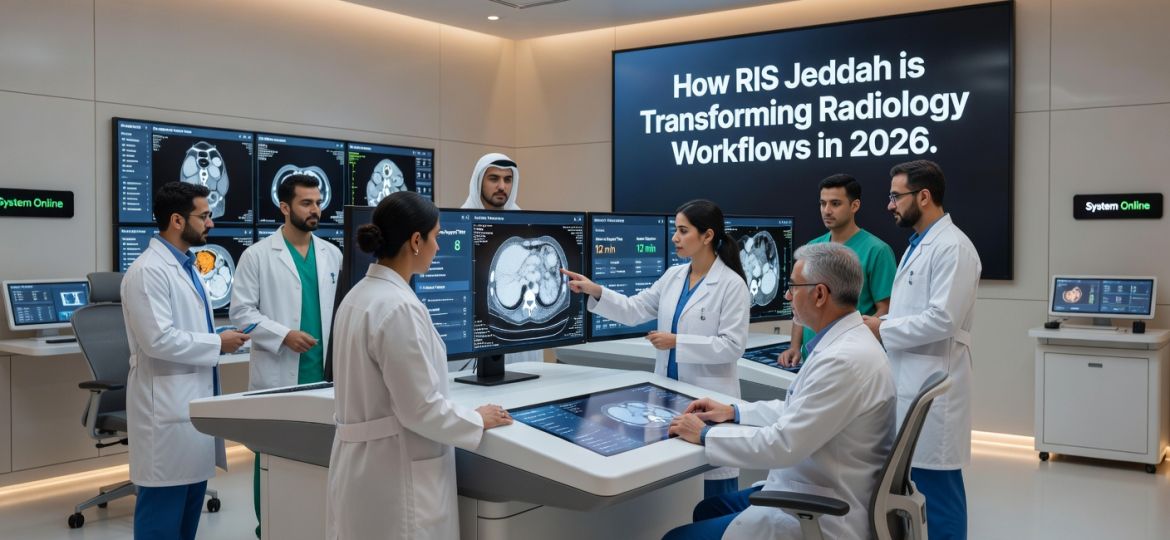
The healthcare world in Saudi Arabia is changing fast. By 2026, the focus has shifted entirely to digital efficiency and patient safety. At the heart of this change in the western region is RIS Jeddah. A Radiology Information System, or RIS, is the brain of any modern imaging department. It manages everything from the moment a patient books an appointment to the final delivery of their report.
For clinics and hospitals, adopting a high-quality RIS system is no longer a choice. It is a necessity for staying competitive and compliant.
Understanding the Core of RIS Radiology in KSA
To understand how things are changing, we first need to look at what RIS radiology actually does. In simple terms, it is a database that tracks a patient’s journey through the radiology department. It handles the administrative side of things so that doctors can focus on the medical side.
In Saudi Arabia, the push for digital health KSA has made these systems more advanced than ever. A modern Radiology Information System (RIS) does the following:
- Patient Scheduling: It organizes the calendar for MRI, CT scans, and X-rays. This reduces double bookings and long wait times.
- Workflow Tracking: Staff can see exactly where a patient is. They know if the patient has checked in, is under the scanner, or is waiting for a report.
- Result Distribution: Once the radiologist writes the report, the RIS sends it to the right doctor immediately.
- Billing and Coding: It automates the financial part of the visit. This is very important for patient data security Saudi Arabia and insurance accuracy.
The Power of PACS and RIS Integration
You cannot talk about RIS Jeddah without mentioning PACS. PACS stands for Picture Archiving and Communication System. While the RIS manages the data and text, the PACS system manages the actual images.
In 2026, the best hospitals use PACS and RIS integration to create a seamless experience. This means the doctor does not have to open two different programs. They can see the patient’s history in the RIS and the X-ray in the PACS at the same time. This RIS and PACS integration is the gold standard for radiology workflow optimization.
Why PACS and RIS System KSA Matters for Hospitals
The PACS and RIS system KSA market has grown because hospitals need to handle more patients. With the Saudi Vision 2030 healthcare transformation, there is a big move toward “paperless” and “filmless” hospitals.
- PACS systems store years of images without taking up physical space.
- The PACS and RIS system Saudi Arabia uses today ensures that images are available to any doctor in the network instantly.
- PACS radiology KSA standards require high-quality images that meet DICOM standards KSA.
How RIS Jeddah Aligns with Saudi Vision 2030
The Saudi Vision 2030 healthcare digitalization plan is about making life better for citizens. Health Cluster is playing a big role in this. By dividing the country into clusters, the government makes it easier to manage health resources.
RIS Jeddah helps this vision by making sure that every Radiology Information System Jeddah uses can talk to other systems. This is called interoperability. When a patient moves from a small clinic in Jeddah to a large hospital in Riyadh, their records should follow them.
NPHIES Integration and Data Privacy
One major part of the 2026 landscape is NPHIES integration. NPHIES is the national platform for insurance and health exchange. Any RIS system or PACS system radiology used in Jeddah must connect to NPHIES. This makes insurance claims faster and more transparent.
Also, the Personal Data Protection Law (PDPL) healthcare rules are very strict now. RIS Jeddah systems are built to keep patient data safe. They use encryption to make sure only authorized people can see private medical files. This meets the MOH data privacy regulations and Saudi Health Council (SHC) guidelines.
The Technical Side: DICOM, HL7, and FHIR
For the tech-savvy, RIS Jeddah relies on international standards. This ensures that a machine from one company can work with software from another.
- DICOM: This is the language of medical images. Digital Imaging and Communications in Medicine (DICOM) is used by every PACS system to ensure image quality.
- HL7 FHIR: This is the language of patient data. It helps with HIS, RIS, and PACS integration. When these three work together, the Hospital Information System (HIS) knows exactly what is happening in radiology.
- Universal Viewer for radiology: This allows doctors to see images on their tablets or phones securely. It is a key part of teleradiology services KSA.
Improving the Patient Experience in Jeddah
Why does a clinic buy medical imaging software Jeddah? It is all about the patient. In the past, patients had to carry large envelopes with plastic films inside. Today, thanks to PACS and RIS, that is gone.
- Reducing diagnostic turnaround time: Reports are ready in minutes or hours instead of days.
- Real-time patient tracking in radiology: Patients can receive a text message when their results are ready.
- Unified patient records KSA: A patient’s entire imaging history is in one place. This helps doctors see how a condition has changed over time.
- Medical imaging cost reduction: Hospitals save money on film and storage. They pass these savings on to the system.
Choosing the Right Solution for Your Health Cluster
If you are managing a clinic or a hospital, you need scalable healthcare IT solutions KSA. You want a system that grows as your patient count grows. Health Cluster offers insights into the best tools for the job.
Whether you need PACS cardiology, PACS radiography, or a system for PACS in ECG, integration is the key. A HIS, RIS, and PACS systems approach ensures no data is lost. It also helps you meet CBAHI standards for radiology, which are the quality marks for Saudi healthcare.
Conclusion
The digital shift in Jeddah is making healthcare safer and faster. RIS Jeddah is the engine driving this change. By combining the administrative power of a Radiology Information System (RIS) with the clinical power of a Picture Archiving and Communication System (PACS), Jeddah is setting a global example.
As we move through 2026, the focus remains on radiology workflow optimization and meeting the goals of Saudi Vision 2030. For hospitals, this means investing in the right medical imaging software Saudi Arabia to ensure a healthy future for all.
Are you looking to upgrade your clinic’s digital infrastructure? At Health Cluster, we specialize in helping healthcare providers navigate the complex world of medical technology.
Book a demo today to learn how our services can transform your radiology workflow and improve patient outcomes.