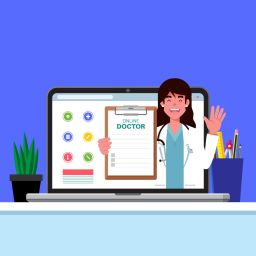

Healthcare is moving beyond the hospital and clinic. Patients can now receive care while staying at home. Doctors can review health data without requiring a patient to visit the clinic for every checkup.
This is where RPM management software becomes important.
Remote Patient Monitoring (RPM) software allows healthcare providers to collect, transmit, and review patient health data from connected devices. These may include blood pressure monitors, glucose meters, pulse oximeters, wearable devices, and other medical equipment.
For healthcare providers in Saudi Arabia and the UAE, RPM can support chronic disease management, telemedicine, home healthcare, preventive care, and continuous patient monitoring.
However, choosing an RPM platform is not only about collecting health data. A strong solution should connect that data with the patient’s clinical record, care team, telehealth workflow, and wider healthcare system.
Health Cluster provides an integrated digital healthcare platform that combines remote patient monitoring software, EMR, HIS, telemedicine, patient applications, and healthcare interoperability. Its RPM solution is designed to connect health devices, transmit data in real time, generate alerts, and support continuous patient care.
What Is RPM Management Software?
RPM management software is a healthcare technology platform that allows medical professionals to monitor patients remotely.
Instead of relying only on information collected during a clinic visit, doctors can receive health information from patients between appointments.
For example, a patient with hypertension may use a connected blood pressure monitor at home. The reading can be sent to the RPM platform. The care team can then review the patient’s readings and monitor changes over time.
The same model can support:
- Diabetes remote monitoring: Track glucose readings and identify changes that may require clinical attention.
- Hypertension monitoring: Review blood pressure trends without requiring frequent clinic visits.
- Cardiac patient monitoring: Monitor selected cardiac measurements and support follow-up care.
- Elderly patient monitoring: Help care teams maintain visibility of health indicators for older patients.
- Post-discharge monitoring: Continue monitoring patients after they leave the hospital.
- Home-based patient monitoring: Extend clinical care into the patient’s home.
The goal is not simply to collect more data. The goal is to give healthcare professionals useful information at the right time so they can make better-informed care decisions.
How Does Remote Patient Monitoring Software Work?
A typical remote patient monitoring platform connects the patient, medical device, healthcare provider, and clinical record.
The process can be simple:
- The patient uses a connected device.
A blood pressure monitor, glucose meter, pulse oximeter, wearable, or other supported device collects health data. - The data is transmitted securely.
The patient’s readings are sent to the RPM software. - The healthcare team reviews the data.
Doctors and care teams can see current readings and patient trends. - The system identifies important changes.
Alerts can help the care team identify readings that require attention. - The provider takes action.
The doctor may contact the patient, adjust the care plan, schedule a virtual consultation, or recommend an in-person visit.
This creates a continuous care model instead of a system that only captures information during appointments.
Health Cluster’s RPM solution supports health monitoring, real-time data transmission, alerts and notifications, medication alerts, analytics, chronic disease management, telehealth integration, patient education, security, and interoperability.
Key Features of RPM Management Software
The best RPM software for hospitals, clinics, and healthcare providers should provide more than a patient dashboard.
Real-Time Patient Monitoring
Healthcare teams can monitor health information as it is transmitted from connected devices. This gives clinicians access to current patient information instead of relying only on older readings.
Medical Device and Wearable Integration
An effective remote healthcare monitoring software solution should support integration with relevant medical devices and wearables.
Depending on the care program, this can include:
- Blood pressure monitors
- Glucose meters
- Pulse oximeters
- Wearable fitness or health trackers
- Cardiac monitoring devices
- Other connected medical devices
Health Cluster’s RPM solution is designed to connect with health devices and transmit patient information to healthcare providers.
Alerts and Notifications
RPM becomes more useful when data can trigger meaningful alerts.
For example, a care team may need to review a patient’s reading when it moves outside a defined clinical range.
Alerts can help healthcare professionals focus on patients who need attention rather than manually checking every patient record at the same frequency.
Analytics and Patient Trends
One reading may not tell the full story.
Digital patient monitoring should help providers understand trends over time. Analytics can support the review of repeated readings and help clinicians identify changes in a patient’s condition.
Medication Alerts
Medication reminders and alerts can support patient adherence and help care teams maintain better communication with patients.
Secure Patient Communication
RPM works best when patients can communicate with their healthcare providers as part of the same care journey.
This can connect remote monitoring with virtual care, teleconsultation, telemedicine, and patient engagement.
EMR and HIS Integration
One of the most important features is RPM EMR integration.
Patient monitoring data should not remain isolated inside a separate application. Connecting RPM with the EMR or HIS creates a more complete patient record.
Health Cluster combines RPM with its wider EMR and HIS ecosystem, helping healthcare organizations connect clinical workflows instead of managing isolated systems.
Why RPM Is Important for Chronic Disease Management
Chronic diseases often require regular monitoring.
A patient may visit a doctor once every few weeks or months. But their health condition can change between those visits.
RPM helps bridge this gap.
For patients with diabetes, hypertension, cardiovascular conditions, or other long-term health needs, chronic disease monitoring can provide healthcare teams with more frequent information.
This supports a shift from reactive care to more proactive care.
Saudi Arabia is also investing in digital and proactive approaches to chronic disease care. In 2025, Saudi Arabia’s Ministry of Health reported the launch of a Diabetes Command and Control Center that enables electronic and proactive monitoring of diabetes-related health indicators and real-time tracking of vital signs.
This direction shows why RPM software for chronic care is becoming an important part of modern healthcare delivery.
RPM and Telemedicine: What Is the Difference?
RPM and telemedicine are related, but they are not the same.
Telemedicine allows a patient and doctor to communicate remotely. This may happen through a video consultation, audio call, or other virtual care channel.
Remote Patient Monitoring collects health information from the patient while they are away from the healthcare facility.
The two technologies work better together.
Consider a patient in Riyadh with hypertension.
The patient checks their blood pressure at home. The RPM platform receives the readings. The doctor reviews the patient’s trends. If the care team needs to speak with the patient, they can schedule a virtual consultation.
This creates a connected care journey:
Device → RPM → Patient Record → Doctor → Teleconsultation → Care Plan
Health Cluster connects its RPM solution with teleconsultation, allowing healthcare providers to combine remote monitoring with virtual care.
RPM Management Software in Saudi Arabia
The demand for digital healthcare solutions in Saudi Arabia (KSA) continues to grow.
Healthcare providers in Riyadh, Jeddah, and other parts of the Kingdom are looking for solutions that can support connected care, digital records, telehealth, chronic disease management, and healthcare interoperability.
Saudi healthcare organizations also operate within a broader digital health ecosystem.
NPHIES Integration
NPHIES, the National Platform for Health Information Exchange Services, supports the exchange of healthcare and insurance information in Saudi Arabia. The official NPHIES technical documentation describes the platform as a point of contact for providers, insurers, and third-party administrators for eClaims and clinical information exchange.
For an integrated healthcare platform, RPM should therefore not be viewed as an isolated application.
It should work alongside the EMR, HIS, billing, insurance, and other clinical systems.
Health Cluster provides an integrated healthcare platform with NPHIES-focused EMR capabilities, RPM, HIS, LIS, telemedicine, and other healthcare modules.
ZATCA and E-Invoicing
Healthcare providers in Saudi Arabia also need to consider their financial workflows.
ZATCA’s e-invoicing framework requires electronic invoicing through compliant electronic solutions. Phase 1 began on December 4, 2021, while Phase 2 involves integration with ZATCA systems and has been rolled out in waves from January 1, 2023.
This is why a broader healthcare software ecosystem can be more valuable than a standalone RPM tool.
Clinical care, billing, revenue cycle management, and e-invoicing can be managed as connected parts of the healthcare operation.
RPM Management Software in the UAE
The UAE has also built a strong digital healthcare ecosystem around connected medical records and health information exchange.
Healthcare providers in Dubai and Abu Dhabi need to consider the relevant health information exchange environment when selecting healthcare software.
NABIDH in Dubai
NABIDH is Dubai’s health information exchange platform. It securely connects patient data across Dubai’s public and private healthcare network and supports better care coordination and clinical collaboration.
The NABIDH developer platform also requires healthcare facilities to connect their Electronic Medical Record systems to NABIDH and provides integration specifications, including HL7-related requirements.
For healthcare providers in Dubai, RPM software should therefore fit into the wider EMR and interoperability architecture.
Malaffi in Abu Dhabi
In Abu Dhabi, Malaffi is the health information exchange platform connecting public and private healthcare providers.
Malaffi enables secure, real-time exchange of important patient health information and creates unified patient records. Its available data includes vital signs, laboratory results, medications, diagnoses, procedures, clinical documents, and other information.
This makes interoperability an important consideration when selecting RPM software UAE solutions.
RPM-generated information should be handled as part of the patient’s wider clinical journey, with appropriate security, access controls, and integration.
Riayati and the UAE Digital Health Ecosystem
At the national level, Riayati supports the UAE’s National Unified Medical Record (NUMR).
The UAE Ministry of Health and Prevention states that Riayati integrates with NABIDH and Malaffi and supports secure data exchange and interoperability across the healthcare ecosystem.
For healthcare organizations in Dubai, Abu Dhabi, and other UAE emirates, this highlights an important point:
The best remote patient monitoring platform is not simply the one that collects the most data. It is the one that can fit into the wider digital health ecosystem.
What Should Healthcare Providers Look for in RPM Software?
When comparing the best RPM software, healthcare organizations should look beyond the number of features.
Consider these areas:
- Integration: Can the RPM platform connect with your EMR, EHR, HIS, telemedicine system, and medical devices?
- Interoperability: Does it support healthcare data exchange and relevant integration standards?
- Clinical workflows: Can doctors and care teams review patient data without creating extra work?
- Alerts: Can the system identify readings that require attention?
- Scalability: Can the platform support a small clinic today and a larger patient population later?
- Security: Does the solution provide appropriate controls for protecting patient information?
- Patient engagement: Can patients easily participate in their own care?
- Regional requirements: Can the solution support the digital healthcare environment in KSA or UAE?
- Analytics: Can providers understand patient trends instead of viewing isolated readings?
The right RPM management software should fit into the provider’s workflow.
It should not create another disconnected system for doctors and nurses to manage.
Who Can Benefit From RPM Software?
RPM can support a wide range of healthcare organizations.
Hospitals
Hospitals can use RPM for post-discharge monitoring, chronic disease programs, follow-up care, and selected home-based care models.
Clinics and Medical Centers
Clinics can use RPM to maintain contact with patients between appointments and support long-term care programs.
Primary Healthcare Providers
RPM can support preventive healthcare and chronic disease management by giving care teams more information between routine visits.
Home Healthcare Providers
Home healthcare teams can combine remote monitoring with in-person visits and telemedicine. Health Cluster’s home healthcare solution combines EMR, scheduling, telemedicine, RPM, RCM, billing, and interoperability in one platform.
How Health Cluster Supports Remote Patient Monitoring
Health Cluster approaches RPM as part of a wider digital healthcare ecosystem.
Its platform combines EMR, HIS, RPM, telemedicine, patient and doctor applications, LIS, pharmacy, RCM, billing, and other healthcare capabilities. This integrated model helps reduce the need for disconnected systems.
Health Cluster’s RPM solution supports:
- Health monitoring: Connect and monitor patient health data from supported devices.
- Real-time transmission: Receive current health information for clinical review.
- Alerts and notifications: Highlight readings that may need attention.
- Chronic disease management: Support ongoing monitoring for long-term conditions.
- Telehealth integration: Connect RPM with virtual care and teleconsultation.
- Analytics and insights: Help care teams understand patient trends.
- Patient education: Support better patient participation in care.
- Interoperability: Connect RPM with the wider healthcare technology environment.
- Data security: Help protect sensitive patient information.
This integrated approach is particularly useful for healthcare organizations looking for RPM software for hospitals, RPM software for clinics, or an enterprise remote patient monitoring solution in KSA and UAE.
Frequently Asked Questions About RPM Management Software
What is RPM management software?
RPM management software is a digital healthcare platform that collects patient health data from connected devices and allows healthcare professionals to monitor patients remotely.
How does remote patient monitoring software work?
Patients use connected medical devices or wearables. The devices collect health data and transmit it to the RPM platform, where authorized healthcare professionals can review readings, trends, and alerts.
What are the benefits of RPM software for hospitals?
RPM can support post-discharge monitoring, chronic disease management, continuous patient monitoring, better patient engagement, and proactive follow-up care.
Can RPM software integrate with an EMR?
Yes. EMR integration is one of the most important capabilities to consider. An integrated RPM platform can help make remote health information part of the patient’s wider clinical record.
What devices can be connected to RPM software?
Depending on the platform, RPM can connect with devices such as blood pressure monitors, glucose meters, pulse oximeters, wearable devices, and other supported medical monitoring equipment.
Is remote patient monitoring available in Saudi Arabia?
Yes. RPM is part of the wider digital healthcare transformation taking place in Saudi Arabia. Healthcare providers can use RPM to support chronic disease monitoring, telehealth, home healthcare, and continuous care.
Is RPM software suitable for clinics and hospitals?
Yes. RPM can be configured for different healthcare settings, from clinics and primary care providers to hospitals and home healthcare organizations.
What is the difference between RPM and telemedicine?
Telemedicine enables remote communication between patients and healthcare professionals. RPM continuously or regularly collects patient health information from remote locations. Combining both creates a more connected model of virtual care.
How does RPM support telemedicine?
RPM gives doctors current patient health information before or during a virtual consultation. This allows the consultation to be based on actual patient readings instead of conversation alone.
How much does RPM software cost?
RPM software cost depends on factors such as the number of patients, connected devices, integrations, deployment model, customization, and required healthcare modules. Healthcare organizations should evaluate the total solution rather than comparing software price alone.
The Future of Remote Patient Monitoring in KSA and UAE
Remote care is moving toward a more connected model.
Patients will continue to use digital devices to track health information. Healthcare providers will need systems that can turn this data into useful clinical information.
The next stage is not simply more monitoring.
It is connected monitoring.
RPM needs to work with EMR, EHR, HIS, telemedicine, patient apps, medical devices, analytics, and healthcare information exchanges.
For providers in Saudi Arabia, this means considering the broader NPHIES and digital health ecosystem.
For providers in the UAE, it means considering the interoperability environment around NABIDH, Malaffi, and Riayati.
The result can be a more continuous care model where patients stay connected with their care teams beyond the walls of a hospital or clinic.
Choose an Integrated RPM Platform With Health Cluster
The right RPM management software should do more than collect readings.
It should help healthcare providers connect patients, devices, doctors, clinical records, telemedicine, and care workflows in one digital environment.
For hospitals, clinics, medical centers, and home healthcare providers in Saudi Arabia and the UAE, Health Cluster provides an integrated approach to remote patient monitoring, EMR, HIS, telemedicine, interoperability, and digital healthcare management.
If your organization is planning to implement RPM software in KSA or UAE, explore how Health Cluster can support your remote care strategy.
Book a demo with Health Cluster today and discover how integrated RPM can help your organization deliver more connected, proactive, and patient-centered care.