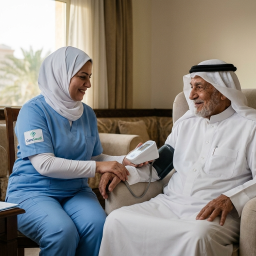

Home healthcare is changing how patients receive medical care in the UAE. More patients now want quality care in the comfort of their own homes. This includes elderly patients, people with chronic conditions, patients recovering after surgery, and those who need long-term nursing support.
As home healthcare grows, managing patients through paper records, spreadsheets, phone calls, and separate systems is no longer enough.
Healthcare providers need a connected digital solution.
The best home healthcare software in UAE helps providers manage patients, nurses, caregivers, appointments, home visits, clinical records, billing, and care plans from one platform. It can also connect home healthcare with EMR, Telemedicine, Remote Patient Monitoring (RPM), and Revenue Cycle Management (RCM).
For providers in Dubai, Abu Dhabi, Sharjah, and other emirates, the right home healthcare software UAE solution can improve daily operations while supporting better patient care.
What Is Home Healthcare Software?
Home healthcare software is a digital platform designed to manage healthcare services delivered at a patient’s home.
It connects clinical teams, caregivers, administrators, patients, and management through a centralized system.
A modern home healthcare management system UAE can support the full care journey, from patient registration and scheduling to home visits, clinical documentation, billing, and follow-up.
Key functions can include:
- Patient management: Keep patient demographics, medical history, allergies, diagnoses, and other health information in one place.
- Home visit management: Plan, assign, track, and document visits made by nurses and caregivers.
- Care plan management: Create personalized care plans and track patient progress over time.
- EMR: Maintain digital patient records that can be accessed by authorized healthcare professionals.
- Scheduling: Match patients with available nurses and caregivers based on workload and visit requirements.
- Billing and RCM: Connect delivered services with billing, claims, and financial workflows.
- Telemedicine: Support virtual consultations when an in-person visit is not required.
- RPM: Monitor selected patient health data between physical visits.
This makes home care software UAE providers can use more than a scheduling tool. It becomes part of the wider digital healthcare ecosystem.
Why Is Home Healthcare Growing in the UAE?
The UAE healthcare sector is moving toward more connected and patient-centered care.
Home healthcare gives patients access to medical services without requiring every interaction to happen inside a hospital or clinic.
It can be useful for elderly care, chronic disease management, rehabilitation, post-discharge care, long-term nursing, and other services delivered outside traditional healthcare facilities.
Digital health also plays an important role.
A connected digital home healthcare software UAE solution allows healthcare organizations to coordinate care while giving authorized users access to current patient information.
Telemedicine and Remote Patient Monitoring can further extend care beyond the home visit. Health Cluster’s home healthcare platform combines these capabilities with EMR, HIS, RCM, and other healthcare workflows.
Why Do UAE Healthcare Providers Need Home Healthcare Software?
Managing a growing home healthcare operation manually can create several problems.
Managers may struggle with nurse scheduling. Nurses may spend time searching for patient information. Administrators may have limited visibility into completed visits. Billing teams may need to reconcile services manually.
These issues become harder as the number of patients, caregivers, branches, and daily visits increases.
The right home healthcare management software can bring these workflows together.
It can help providers:
- Reduce manual administrative work.
- Improve home visit scheduling.
- Give nurses access to relevant patient information.
- Improve communication between care teams.
- Keep clinical documentation up to date.
- Track patient care plans.
- Improve billing and claims workflows.
- Monitor operational performance.
- Support connected care across multiple locations.
The result is a more organized home healthcare operation.
Key Features of the Best Home Healthcare Software in UAE
Not every home care software platform offers the same capabilities.
When choosing a solution, healthcare organizations should look beyond basic appointment scheduling. The platform should support both clinical and operational needs.
1. Home Healthcare Scheduling Software
Scheduling is one of the most important parts of home healthcare.
A nurse may need to visit several patients in different locations on the same day. Managers must consider availability, working hours, patient needs, visit duration, and location.
A strong home healthcare scheduling software solution helps organize these activities from one system.
It can support:
- Nurse scheduling.
- Caregiver scheduling.
- Home visit scheduling.
- Appointment management.
- Staff availability.
- Visit assignment.
- Rescheduling and follow-ups.
Better scheduling can reduce conflicts and help teams use their time more effectively.
2. Nurse and Caregiver Management
Home healthcare depends heavily on field staff.
A good caregiver management software solution gives managers better visibility into staff assignments and workloads.
Managers can see which caregiver is assigned to which patient and when the visit is expected.
This can support better workforce planning and reduce scheduling gaps.
For larger organizations, healthcare workforce management software can also help improve staff utilization across different branches and service areas.
3. Home Visit Management
Home visits are at the center of home healthcare.
A complete home visit management software solution should allow providers to manage each visit from scheduling through completion.
The system can record important details such as:
- Assigned healthcare professional.
- Visit date and time.
- Visit status.
- Clinical documentation.
- Patient assessments.
- Vital signs.
- Care delivered.
- Follow-up requirements.
This creates a clear digital record of each patient interaction.
4. Mobile Healthcare App for Nurses
Home healthcare professionals spend most of their working day in the field.
They should not have to return to the office every time they need patient information.
A mobile healthcare app allows nurses and caregivers to access the information they need during a visit.
Depending on the platform, field staff can review care plans, record vital signs, complete clinical notes, update visit status, and document care directly from a mobile device.
Health Cluster’s home healthcare solution includes mobile capabilities for field staff, helping keep information synchronized with the central healthcare platform.
5. Home Healthcare EMR
An Electronic Medical Record is one of the most important parts of modern home healthcare.
A home healthcare EMR allows authorized healthcare professionals to access relevant patient information during care delivery.
This may include:
- Medical history.
- Diagnoses.
- Allergies.
- Medications.
- Laboratory results.
- Radiology reports.
- Clinical notes.
- Progress notes.
- Care plans.
An integrated EMR also reduces the need for duplicate data entry.
Health Cluster connects Home Healthcare with EMR and HIS capabilities, creating a more unified patient record across the care journey.
6. Digital Clinical Documentation
Paper-based documentation can slow down care and create unnecessary administrative work.
Clinical documentation software gives nurses and physicians a structured way to record patient information.
Documentation may include nursing assessments, progress notes, vital signs, treatment information, medication records, and care plan updates.
When documentation is recorded digitally, authorized teams can access current information more easily.
This also helps create a better history of the patient’s care.
7. Care Plan Management
Every patient may have different healthcare needs.
A home healthcare care plan software solution helps providers create and manage personalized care plans.
Doctors and nurses can define care goals, document interventions, monitor progress, and update the plan when the patient’s needs change.
This supports more consistent care across different visits and caregivers.
8. Medication Management
Medication management is another important part of home healthcare.
Patients may take several medications at different times.
A digital system can help healthcare teams record prescriptions, medication instructions, administration details, and related clinical information.
When medication data is connected to the patient’s EMR, authorized clinicians have a clearer view of the patient’s treatment history.
9. Telemedicine Integration
Not every follow-up requires a physical home visit.
Telemedicine software UAE providers use can support virtual consultations for selected cases.
For example, a physician may conduct a follow-up consultation after a nurse completes an in-person visit.
When Telemedicine is connected to the EMR, consultation information can remain part of the patient’s digital record.
This creates a more connected model of care.
Health Cluster integrates Telemedicine with its broader healthcare platform, allowing virtual care to work alongside home healthcare and EMR workflows.
10. Remote Patient Monitoring
Home healthcare does not stop when the nurse leaves the patient’s home.
Some patients need continued monitoring between visits.
Remote Patient Monitoring UAE solutions can collect health data from connected devices and make relevant information available to healthcare teams.
Depending on the use case, RPM may support monitoring of:
- Blood pressure.
- Blood glucose.
- Heart rate.
- Oxygen saturation.
- Temperature.
- Weight.
RPM can be particularly useful for selected patients who require ongoing observation.
When RPM data connects with the wider healthcare system, clinicians can have a more complete view of the patient’s condition.
11. Healthcare Billing and RCM
Clinical care and financial operations should not work in isolation.
Home healthcare billing software can connect services delivered during visits with billing workflows.
An integrated Revenue Cycle Management (RCM) solution can support processes such as eligibility, charge capture, claims, invoicing, payment tracking, and reconciliation.
This can reduce manual work and improve financial visibility.
Health Cluster provides RCM capabilities as part of its broader healthcare platform, connecting clinical and financial workflows.
Healthcare Interoperability in the UAE
Interoperability is becoming increasingly important in digital healthcare.
Healthcare providers often need to exchange information with other systems, facilities, and health information exchanges.
A modern healthcare interoperability UAE strategy can help reduce duplicate records, improve information sharing, and support continuity of care.
Important technologies and platforms include:
- NABIDH: Relevant to healthcare data exchange in Dubai.
- Malaffi: Abu Dhabi’s health information exchange ecosystem.
- Riayati: The UAE’s national health information exchange initiative.
- HL7: A widely used standard for healthcare data exchange.
- FHIR: A modern standard designed to support healthcare interoperability and API-based data exchange.
Health Cluster supports interoperability capabilities involving NABIDH, Malaffi, Riayati, HL7, and FHIR as part of its connected healthcare platform.
Home Healthcare Software in Dubai
Dubai has a strong focus on connected healthcare and health information exchange.
For organizations operating in Dubai, NABIDH integration is an important consideration when evaluating healthcare software.
A NABIDH compliant home healthcare software solution should be evaluated based on its ability to support applicable data exchange, security, interoperability, and DHA requirements.
Health Cluster provides a home healthcare platform with NABIDH-related interoperability capabilities alongside EMR, scheduling, Telemedicine, RPM, RCM, and billing.
Home Healthcare Software in Abu Dhabi
Healthcare providers in Abu Dhabi operate within a different health information exchange environment.
Malaffi integration is therefore an important consideration for organizations looking for home healthcare software in Abu Dhabi.
Malaffi enables healthcare organizations within Abu Dhabi to exchange relevant patient health information through a connected health information exchange.
Health Cluster’s Malaffi capabilities support the exchange of information such as patient demographics, diagnostic information, medications, allergies, diagnoses, and digital EMR documentation.
Home Healthcare Software Across the UAE
Home healthcare providers may also operate across multiple emirates.
This makes flexibility important.
Organizations should look for software that can support their operational model while addressing the relevant regulatory and interoperability requirements for each location.
Whether a provider operates in Dubai, Abu Dhabi, Sharjah, Ajman, Ras Al Khaimah, Fujairah, or Umm Al Quwain, a scalable healthcare platform can provide a common foundation for managing operations.
How to Choose the Best Home Healthcare Software in UAE
Choosing the best home healthcare software in UAE is not only about choosing the system with the longest feature list.
The right solution should match your organization’s size, workflows, patient volume, staff structure, and growth plans.
Consider these areas before making a decision.
1. Check the Home Healthcare Workflows
Make sure the system supports the actual work of your nurses, caregivers, physicians, coordinators, and administrators.
2. Check EMR Integration
Patient records should connect with home healthcare workflows rather than remain in a separate system.
3. Review Scheduling Capabilities
Look for nurse scheduling, caregiver scheduling, visit management, staff availability, and other tools needed for field operations.
4. Evaluate Interoperability
Ask how the platform supports NABIDH, Malaffi, Riayati, HL7, FHIR, and other required integrations.
5. Look at Billing and RCM
Clinical services should flow into billing and claims workflows without unnecessary manual entry.
6. Consider Mobile Access
Field staff need secure access to relevant information while providing care.
7. Check Scalability
The software should support growth in patients, users, branches, and services.
8. Review Security and Access Controls
Healthcare software should provide appropriate role-based access, audit trails, and security controls to protect patient information.
Why Choose Health Cluster for Home Healthcare?
Health Cluster provides more than standalone home care software UAE providers can use for scheduling.
It is an integrated cloud-based healthcare platform designed to connect clinical, operational, and financial workflows.
The platform brings Home Healthcare together with:
- EMR and HIS: Create a connected patient record across healthcare workflows.
- Telemedicine: Extend selected consultations beyond physical visits.
- RPM: Support continuous monitoring for appropriate patients.
- RCM: Connect care delivery with financial and claims workflows.
- Pharmacy and LIS: Connect additional healthcare services where required.
- Analytics and dashboards: Give management better visibility into operational and financial performance.
- Interoperability: Support integration with healthcare data exchange ecosystems and standards.
Health Cluster’s home healthcare solution is designed to support hospitals, clinics, medical groups, and home healthcare providers across the UAE and wider Middle East.
The advantage is simple.
Instead of managing home healthcare through several disconnected applications, organizations can build their workflows around one connected digital health platform.
Frequently Asked Questions
What is home healthcare software?
Home healthcare software is a digital system used to manage healthcare services delivered at a patient’s home. It can support scheduling, patient records, clinical documentation, care plans, billing, caregiver management, Telemedicine, and Remote Patient Monitoring.
What is the best home healthcare software in UAE?
The best home healthcare software in UAE should combine home visit management, scheduling, EMR, clinical documentation, mobile access, care plans, billing, RCM, Telemedicine, RPM, reporting, and healthcare interoperability. The right choice depends on the provider’s specific requirements.
How does home healthcare software work?
The software connects administrators, doctors, nurses, caregivers, and other authorized users through a central platform. Teams can manage patients, appointments, home visits, clinical documentation, care plans, billing, and follow-ups from one system.
What features should home healthcare software have?
Important features include home visit scheduling, nurse and caregiver management, EMR, clinical documentation, care plans, medication management, mobile access, billing, RCM, Telemedicine, RPM, analytics, and interoperability.
Can home healthcare software integrate with EMR?
Yes. An integrated home healthcare EMR can connect home visits and clinical documentation with the patient’s wider medical record. This can reduce duplicate data entry and improve continuity of care.
Can home healthcare software integrate with NABIDH?
Healthcare platforms can be designed to support NABIDH interoperability for applicable Dubai healthcare workflows. Providers should confirm the specific integration scope, regulatory requirements, and implementation status with their software provider.
Can home healthcare software support Malaffi?
Yes. Healthcare platforms can support Malaffi-related interoperability for applicable Abu Dhabi healthcare workflows. Health Cluster provides Malaffi integration capabilities within its broader healthcare platform.
Does home healthcare software support nurse scheduling?
A dedicated home healthcare management system can support nurse scheduling based on staff availability, patient requirements, working hours, and visit schedules.
Can home healthcare software manage billing and insurance claims?
Yes. Home healthcare billing software can connect clinical services with billing and insurance workflows. An integrated RCM solution can further support claims, invoicing, payment tracking, and revenue management.
Does home healthcare software support Telemedicine?
Yes. Modern home healthcare platforms can integrate Telemedicine for virtual consultations, follow-ups, and selected remote care workflows.
Can home healthcare software support Remote Patient Monitoring?
Yes. RPM can connect patient health data from supported devices with the wider healthcare platform. This can help healthcare teams monitor selected patients between physical home visits.
How do I choose home healthcare software in the UAE?
Start by reviewing your workflows, patient volume, staff requirements, integrations, compliance needs, mobile requirements, billing processes, and future growth plans. Then compare platforms based on how well they support these needs.
What are the benefits of cloud-based home healthcare software?
Cloud-based software can provide secure access from different locations, support remote teams, simplify system updates, and make it easier to scale across users and branches. Health Cluster offers healthcare solutions through both cloud and on-premise deployment options depending on client requirements.
Which healthcare software is suitable for home nursing agencies in UAE?
Home nursing agencies should look for software with nurse scheduling, caregiver management, home visit tracking, mobile clinical documentation, EMR, care plans, billing, RCM, reporting, and interoperability capabilities.
Conclusion
The demand for home healthcare is creating new opportunities for healthcare providers across the UAE.
But delivering care at home requires more than sending a nurse to a patient’s location.
Providers need to coordinate people, appointments, clinical records, care plans, medications, billing, and follow-up. They also need secure systems that can connect with the wider healthcare ecosystem.
The best home health care software in UAE should therefore support the complete home healthcare journey.
From home visit scheduling and caregiver management to EMR, Telemedicine, RPM, RCM, billing, analytics, and interoperability, the right platform can help healthcare organizations build a more connected model of care.
Health Cluster brings these capabilities together in one integrated healthcare platform. Its Home Healthcare solution is designed to work alongside EMR, HIS, Telemedicine, Remote Patient Monitoring, RCM, billing, and interoperability capabilities for healthcare organizations across the UAE.
Whether you operate a home nursing agency, clinic, hospital, medical group, or multi-branch healthcare organization, the right home healthcare management software UAE solution can help you reduce manual work, improve visibility, coordinate care, and create a better experience for both patients and healthcare teams.
Ready to Modernize Your Home Healthcare Operations?
If you are looking for the best home healthcare software in UAE, Health Cluster can help you build a connected digital healthcare environment tailored to your organization’s needs.
Book a personalized Health Cluster demo today and discover how Home Healthcare, EMR, Telemedicine, RPM, RCM, scheduling, and healthcare interoperability can work together on one platform.