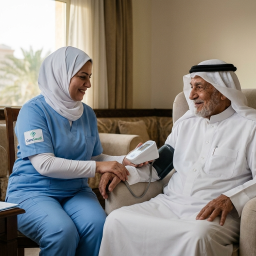

Home healthcare is changing the way people receive medical care. Today, many patients prefer treatment in the comfort of their own homes. This is especially true for older adults, people with chronic diseases, patients recovering after surgery, and those who need long-term nursing care.
To manage these services, healthcare providers need more than spreadsheets or paper records. They need a complete Home healthcare software UAE solution that connects caregivers, nurses, physicians, administrators, and patients on one secure platform.
A modern home healthcare management software helps providers schedule visits, manage electronic medical records (EMR), coordinate care teams, track patient progress, process insurance claims, and stay compliant with UAE healthcare regulations.
For hospitals, clinics, and home care agencies across Dubai, Abu Dhabi, Sharjah, Ras Al Khaimah, and the rest of the UAE, choosing the right digital platform has become essential for delivering safe, efficient, and connected care.
Health Cluster provides an integrated cloud-based healthcare platform designed specifically for the Middle East. Its solution combines Home Healthcare, EMR, HIS, Telemedicine, Remote Patient Monitoring (RPM), Revenue Cycle Management (RCM), and interoperability with Nabidh, Malaffi, and Riayati, helping providers deliver seamless care while meeting regional Malaffi compliance requirements. (Health Cluster)
What Is Home Healthcare Software?
Home healthcare software is a digital platform that helps healthcare organizations manage medical services delivered at a patient’s home.
Instead of using multiple disconnected systems, providers can manage everything from one dashboard.
This includes:
- Patient registration and medical records
- Nurse and caregiver scheduling
- Home visit management
- Clinical documentation
- Medication management
- Insurance claims
- Billing and payments
- Telemedicine consultations
- Remote patient monitoring
- Care coordination
Whether you operate a hospital, home nursing agency, rehabilitation center, or specialty clinic, a home healthcare in UAE improves efficiency while giving patients better care.
Why Is Home Healthcare Growing in the UAE?
Healthcare is becoming more patient-centered homecare with Malaffi across the UAE.
Patients now expect healthcare services that are convenient, connected, and available wherever they are.
Several factors are driving this growth.
Aging Population
Many elderly patients require continuous care but prefer staying at home rather than being admitted to a hospital.
Chronic Disease Management
Patients living with diabetes, hypertension, heart disease, or respiratory conditions benefit from regular monitoring without frequent hospital visits.
Digital Health Transformation
The UAE government continues investing in digital healthcare initiatives that encourage healthcare providers to adopt modern healthcare technology.
Telemedicine Adoption
Virtual consultations allow physicians to provide follow-up care while reducing unnecessary travel.
Remote Patient Monitoring (RPM)
Connected medical devices enable clinicians to monitor patient health in real time and respond quickly when conditions change. AI-powered RPM solutions can also help detect early signs of deterioration, supporting proactive care.
Why Healthcare Providers Need Home Healthcare Software UAE
Managing home care manually becomes difficult as patient numbers increase.
Healthcare providers operating across GCC countries can also learn about our Home healthcare program in Saudi Arabia designed for Saudi regulations. often face challenges like:
- Missed appointments
- Duplicate patient records
- Inefficient nurse scheduling
- Delayed documentation
- Billing errors
- Poor communication between care teams
- Limited visibility into patient progress
A cloud-based Home healthcare software UAE solves these problems by connecting every department into one platform.
Instead of switching between different applications, staff members work from one secure system.
This improves both operational efficiency and patient outcomes.
Key Benefits of Home Healthcare Management Software
Better Patient Care
Doctors and nurses can instantly access complete electronic patient records before every visit.
This allows better clinical decisions and reduces medical errors.
Care plans remain consistent across every visit.
Faster Appointment Scheduling
A modern patient scheduling software makes booking simple.
Appointments can be assigned automatically based on:
- Nurse availability
- Patient location
- Clinical specialty
- Visit priority
- Working hours
This reduces scheduling conflicts while improving productivity.
Smarter Nurse Scheduling
Managing dozens or hundreds of caregivers manually is time-consuming.
A dedicated nurse scheduling software helps managers assign the right professional to the right patient.
Some advanced systems also support AI-assisted scheduling to optimize workloads and reduce travel time.
Efficient Home Visit Management
A complete home visit management software tracks every scheduled visit from start to finish.
Managers can monitor:
- Visit status
- Arrival time
- Completion time
- Care notes
- Follow-up visits
This improves accountability across the organization.
Route Optimization for Nurses
Travel time is one of the biggest costs in home healthcare in UAE.
Modern home nursing software UAE includes route optimization that helps caregivers visit more patients while spending less time on the road.
This improves operational efficiency and patient satisfaction.
Electronic Visit Verification
Healthcare providers need proof that every scheduled visit actually happened.
Electronic Visit Verification (EVV) records:
- Arrival time
- Departure time
- GPS location
- Duration of care
This creates greater transparency for providers, patients, and insurers.
Mobile App for Nurses
Today’s caregivers rarely work from a desk.
A mobile application allows nurses to:
- View daily schedules
- Access EMR
- Update visit documentation
- Capture digital signatures
- Upload images
- Record vital signs
- Complete assessments
Health Cluster provides mobile capabilities that allow clinicians to work securely from anywhere while keeping patient records synchronized with the central platform.
Digital Clinical Documentation
Paper documentation creates delays and increases errors.
Clinical documentation software allows healthcare professionals to record:
- Assessment findings
- Vital signs
- Nursing notes
- Care plans
- Medication administration
- Progress reports
Everything is stored securely inside the patient’s Electronic Medical Record (EMR).
Medication Management
Medication mistakes can seriously affect patient safety.
Home healthcare software helps caregivers:
- Track prescriptions
- Receive medication reminders
- Record administration
- Monitor adherence
- Reduce medication errors
This improves both compliance and patient outcomes.
Care Plan Management
Every patient requires a personalized care plan.
A digital care management system allows physicians and nurses to:
- Create treatment plans
- Update goals
- Track patient progress
- Coordinate multidisciplinary teams
- Schedule follow-up visits
Everyone works from the same information.
This creates more consistent care across every visit.
Electronic Medical Records (EMR) Integration
One of the biggest advantages of a modern Home healthcare EMR is having all patient information in one place.
Integrated EMR allows healthcare professionals to access:
- Medical history
- Allergies
- Diagnoses
- Laboratory results
- Radiology reports
- Prescriptions
- Clinical notes
Health Cluster combines Home Healthcare in UAE with a fully integrated EMR and Hospital Information System (HIS), reducing duplicate data entry and creating a single patient record across the care journey.
Better Communication Across Care Teams
Home healthcare involves multiple professionals.
These may include:
- Physicians
- Nurses
- Therapists
- Pharmacists
- Care coordinators
- Billing teams
A centralized home healthcare platform UAE ensures everyone has access to the same patient information.
This reduces communication gaps and improves care coordination.
Home Healthcare Software Features Every UAE Provider Should Look For
Choosing the right Home healthcare software UAE is about more than digitizing patient records. The best platform should support the complete home care journey, from referral to discharge, while improving patient outcomes and operational efficiency.
Here are the essential features every healthcare provider should consider.
Home Visit Scheduling and Dispatch Management
Scheduling home visits can become difficult when managing multiple nurses, physicians, and therapists across different cities.
A modern home visit scheduling software UAE should make this process simple.
Key capabilities include:
- Smart appointment scheduling based on staff availability
- Automatic visit assignments
- Real-time schedule updates
- Calendar view for managers
- Emergency visit allocation
- Recurring visit scheduling
This helps reduce missed appointments and improve resource utilization.
For organizations operating across Dubai, Abu Dhabi, Sharjah, and Ras Al Khaimah, centralized scheduling ensures every team works from the same plan.
GPS Tracking and Route Optimization
Travel time directly impacts productivity.
The best home nursing software UAE includes built-in GPS tracking and route optimization.
These future of home healthcare in UAE help providers:
- Reduce travel distance
- Lower transportation costs
- Increase daily patient visits
- Improve punctuality
- Monitor caregiver locations in real time
Patients also receive more accurate arrival times, creating a better care experience.
Mobile Healthcare for Field Staff
Healthcare professionals spend most of their day outside the office.
A secure mobile application gives caregivers everything they need during patient visits.
Using a mobile app, nurses can:
- Access patient records
- Review care plans
- Record vital signs
- Upload wound images
- Complete assessments
- Capture patient signatures
- Update visit documentation instantly
This reduces paperwork and ensures patient records remain current.
Clinical Documentation Software
Clinical documentation should be quick, accurate, and standardized.
A digital documentation system allows healthcare teams to record every patient interaction while maintaining complete medical histories.
Typical documentation includes:
- Nursing assessments
- Physician notes
- Care plans
- Medication records
- Progress notes
- Treatment outcomes
- Rehabilitation updates
Digital documentation also supports better reporting and clinical decision-making.
Home Healthcare EMR and HIS Integration
Many providers still use separate systems for home care and hospital management.
This often leads to duplicate records and delays.
A modern Home healthcare in UAE EMR should integrate directly with a complete Home Healthcare HIS.
With one connected system, providers can access:
- Electronic Medical Records (EMR)
- Hospital Information System (HIS)
- Laboratory results
- Pharmacy records
- Radiology reports
- Clinical history
- Billing information
Health Cluster delivers an integrated healthcare ecosystem where Home Healthcare, EMR, HIS, billing, pharmacy, laboratory, radiology, and patient engagement work together through a single platform. This creates one patient record across the entire continuum of care.
Telemedicine Integration
Not every consultation requires an in-person visit.
Integrated Telemedicine enables healthcare providers to offer secure virtual consultations when appropriate.
Benefits include:
- Follow-up consultations
- Chronic disease management
- Medication reviews
- Patient education
- Family consultations
- Faster clinical access
Telemedicine also reduces travel while making healthcare more accessible.
When combined with home visits, providers can offer a hybrid care model that improves convenience for patients.
Remote Patient Monitoring (RPM)
Healthcare is becoming more proactive.
Instead of waiting for patients to become ill, providers can continuously monitor health data using Remote Patient Monitoring (RPM).
Connected medical devices can record:
- Blood pressure
- Blood glucose
- Oxygen saturation
- Heart rate
- Weight
- Temperature
The information flows directly into the patient’s Electronic Medical Record.
Clinicians can identify trends earlier and intervene before conditions worsen.
For patients with chronic diseases, RPM improves long-term health management while reducing unnecessary hospital admissions.
Healthcare Dashboard and Business Intelligence
Healthcare organizations generate large amounts of data every day.
Without clear reporting, it becomes difficult to measure performance.
A modern healthcare dashboard provides real-time insights into:
- Daily patient visits
- Staff utilization
- Appointment completion rates
- Revenue performance
- Outstanding claims
- Patient satisfaction
- Clinical outcomes
Healthcare business intelligence allows managers to identify trends and make data-driven decisions.
Revenue Cycle Management (RCM)
Providing quality care also requires strong financial management.
An integrated Revenue Cycle Management (RCM) solution simplifies financial operations from patient registration to final payment.
Key functions include:
- Patient eligibility verification
- Charge capture
- Medical coding
- Insurance claim management
- Claims automation
- Medical invoicing
- Payment reconciliation
- Financial reporting
Healthcare providers benefit from faster reimbursements and fewer rejected claims.
Health Cluster includes integrated RCM software UAE that connects clinical workflows with financial processes, helping providers improve cash flow while reducing administrative work.
Healthcare Billing Software UAE
Manual billing often creates delays and billing errors.
Integrated healthcare billing software UAE automates the billing process by linking clinical services directly with financial records.
Benefits include:
- Faster invoice generation
- Reduced billing errors
- Insurance claim tracking
- Better payment visibility
- Improved revenue collection
This is especially valuable for organizations managing high volumes of home healthcare visits.
Interoperability Is Essential for Connected Care
Healthcare systems should communicate with each other.
This ability is called Interoperability.
Without interoperability, providers often face:
- Duplicate patient records
- Missing clinical information
- Delayed referrals
- Manual data entry
- Increased administrative workload
A connected healthcare ecosystem improves collaboration between hospitals, clinics, laboratories, pharmacies, and home healthcare providers.
Interoperability also creates a better experience for patients because their health information follows them throughout their care journey.
HL7 and FHIR Integration
Two of the most widely used healthcare data standards are HL7 and FHIR.
These standards allow different healthcare systems to exchange information securely and accurately.
Benefits of HL7 integration and FHIR integration include:
- Faster data exchange
- Reduced manual entry
- Better patient safety
- Improved care coordination
- Easier third-party integrations
- Support for future digital health initiatives
Healthcare providers investing in cloud-based platforms should ensure their software supports both standards for long-term scalability.
UAE Healthcare Compliance Matters
Healthcare organizations must comply with national and emirate-level regulations.
The right Home healthcare software UAE should support these compliance requirements while protecting patient information.
Important healthcare initiatives include:
Nabidh
Nabidh enables healthcare providers in Dubai to exchange patient information securely, supporting better coordination between hospitals, clinics, and home healthcare providers.
Malaffi
Malaffi connects healthcare facilities across Abu Dhabi through a unified health information exchange, giving clinicians timely access to patient records.
Riayati
Riayati supports interoperability at the national level by connecting healthcare providers across the UAE and improving continuity of care.
DHA, DOH, and MOHAP Compliance
Healthcare providers should also choose software that supports regulatory requirements from:
- DHA
- DOH
- MOHAP
Compliance helps organizations maintain data security, improve reporting, and deliver consistent patient care.
Health Cluster is built with interoperability and regional compliance in mind, offering integration capabilities for Nabidh, Malaffi, Riayati, HL7, and FHIR to help providers meet evolving digital health requirements across the UAE.
Multi-Branch Healthcare Software
Many healthcare organizations operate from multiple locations.
A multi-branch healthcare software solution allows administrators to manage every branch from one platform.
This provides:
- Centralized reporting
- Shared patient records
- Unified scheduling
- Consistent clinical workflows
- Better operational visibility
Whether serving patients in Dubai, Abu Dhabi, Sharjah, or other emirates, providers can maintain the same standard of care across every location.
How to Choose the Best Home Healthcare Software UAE
Choosing the right Home healthcare software UAE is an important decision. The platform will become the foundation of your daily operations. It should support clinical care, administration, billing, compliance, and future growth.
Before making a decision, evaluate each solution against the following criteria.
Cloud-Based and Scalable
Healthcare organizations grow over time. Your software should grow with you.
A cloud home healthcare software UAE solution offers:
- Secure access from anywhere
- Automatic updates
- Lower infrastructure costs
- Easy expansion across multiple branches
- High system availability
Cloud deployment also allows caregivers to access patient information during home visits without relying on paper records.
Integrated EMR and HIS
Avoid using separate systems for different departments.
The best Home healthcare software with EMR combines clinical and administrative workflows into one platform.
Look for software that includes:
- Electronic Medical Records (EMR)
- Hospital Information System (HIS)
- Appointment scheduling
- Pharmacy management
- Laboratory integration
- Radiology integration
- Billing and finance
- Home healthcare module
An integrated platform reduces duplicate work and creates a single source of truth for patient information.
Compliance with UAE Healthcare Regulations
Healthcare regulations continue to evolve across the UAE.
Your software should support compliance with regional health authorities and interoperability initiatives.
Look for support for:
- Nabidh integration for Dubai
- Malaffi software for homecare integration for Abu Dhabi
- Riayati integration for nationwide health information exchange
- DHA compliant software
- DOH compliant software
- MOHAP compliant software
- HL7 integration
- FHIR integration
This ensures secure data exchange while improving continuity of care.
Built for Home Healthcare
Some healthcare systems simply add a basic home visit feature to a hospital platform.
Instead, choose software that is designed specifically for Home Nursing and community healthcare.
Essential capabilities include:
- Home visit scheduling
- Nurse scheduling software
- Caregiver management
- Mobile healthcare application
- Electronic visit verification
- GPS tracking for caregivers
- Route optimization
- Visit documentation
- Care plan management
These features improve productivity while helping staff deliver consistent care.
Why Healthcare Providers Choose Health Cluster
Healthcare organizations need more than standalone software. They need a complete digital health ecosystem.
Health Cluster delivers a cloud-based healthcare platform designed to support hospitals, clinics, medical groups, and home healthcare providers across the UAE and the wider Middle East.
Instead of using multiple disconnected applications, organizations can manage clinical, operational, and financial workflows from one integrated solution.
Comprehensive Home Healthcare Platform
Health Cluster offers a dedicated Home healthcare management system UAE that supports the complete patient journey.
Key capabilities include:
- Patient registration
- Home visit scheduling
- Nurse and caregiver management
- Mobile application for field staff
- Clinical documentation
- Medication management
- Digital consent forms
- Care plan management
- Appointment scheduling
- Visit documentation
- Electronic Medical Records
- Billing and Revenue Cycle Management
This helps healthcare providers improve efficiency while delivering high-quality patient care.
One Integrated Digital Health Platform
Unlike standalone home care applications, Health Cluster combines multiple healthcare solutions within a single platform.
These include:
- Home Healthcare
- EMR
- HIS
- Laboratory Information System (LIS)
- Pharmacy Management
- Revenue Cycle Management (RCM)
- Telemedicine
- Remote Patient Monitoring (RPM)
- Healthcare Analytics
- Business Intelligence Dashboards
With one connected platform, patient information flows seamlessly across departments.
Built for Interoperability
Healthcare data should move securely between systems.
Health Cluster supports healthcare interoperability through:
- HL7 integration
- FHIR integration
- Nabidh integration
- Malaffi integration
- Riayati integration
These capabilities help healthcare providers meet regional interoperability requirements while improving collaboration across the healthcare ecosystem.
Designed for Digital Health Transformation
The healthcare industry continues to evolve rapidly.
Health Cluster helps organizations embrace Healthcare Digital Transformation through:
- Cloud Computing
- Artificial Intelligence (AI)
- Smart healthcare management
- Healthcare workflow automation
- Remote Patient Monitoring
- Telemedicine integration
- Predictive healthcare analytics
These technologies help providers deliver connected, data-driven care.
Frequently Asked Questions
What is Home Healthcare Software?
Home healthcare software is a digital platform that helps healthcare providers manage patient care delivered at home. It supports scheduling, electronic medical records, billing, documentation, telemedicine, and caregiver management from one system.
How Does Home Healthcare Software Work?
The software connects administrators, physicians, nurses, caregivers, and patients through a centralized platform. It manages appointments, clinical records, home visits, billing, and communication while allowing staff to access patient information securely from any location.
What Are the Benefits of Home Healthcare Software in the UAE?
The main benefits include:
- Better patient care
- Faster scheduling
- Improved caregiver productivity
- Secure Electronic Medical Records
- Healthcare compliance
- Insurance claim management
- Better communication
- Reduced paperwork
- Higher operational efficiency
- Improved patient satisfaction
Which Features Should a Home Healthcare Solution Include?
Look for software that includes:
- EMR
- HIS
- Home visit scheduling
- Nurse scheduling
- Telemedicine
- Remote Patient Monitoring
- Mobile application
- Revenue Cycle Management
- Billing
- GPS tracking
- Care plans
- Clinical documentation
- Healthcare analytics
- HL7 and FHIR integration
Is Home Healthcare Software Compliant with UAE Healthcare Regulations?
A modern solution should support compliance with DHA, DOH, and MOHAP requirements. It should also integrate with Nabidh, Malaffi, and Riayati while supporting interoperability through HL7 and FHIR standards.
Can Home Healthcare Software Integrate with Malaffi and Nabidh?
Yes. Modern healthcare platforms like Health Cluster are designed to support interoperability with Malaffi, Nabidh, and Riayati, allowing secure exchange of patient health information across the UAE healthcare ecosystem.
How Does Home Healthcare Software Improve Patient Outcomes?
It improves care by giving healthcare professionals instant access to patient records, reducing delays, improving communication, supporting remote monitoring, and ensuring personalized care plans are followed consistently.
Is Cloud-Based Home Healthcare Software Secure?
Yes. Reputable cloud healthcare platforms use encryption, access controls, audit logs, and secure infrastructure to protect patient information while meeting healthcare compliance requirements.
How Much Does Home Healthcare Software Cost in the UAE?
The cost depends on several factors, including:
- Organization size
- Number of users
- Required modules
- Integration needs
- Deployment model
- Customization requirements
Most providers offer tailored pricing based on operational requirements rather than fixed packages.
Can Hospitals Use Home Healthcare Software?
Yes. Many hospitals use home healthcare software to extend care beyond hospital walls. It supports post-discharge care, chronic disease management, rehabilitation, elderly care, palliative care, and remote follow-up, creating a connected continuum of care.
Conclusion
The future of healthcare is no longer limited to hospitals and clinics. Patients increasingly expect safe, connected, and convenient care in their own homes. As demand continues to grow across the UAE, healthcare organizations need technology that supports efficient operations while maintaining high standards of clinical care.
A modern Home healthcare software UAE solution brings together scheduling, EMR, HIS, Telemedicine, Remote Patient Monitoring (RPM), Revenue Cycle Management (RCM), and secure interoperability through Nabidh, Malaffi, Riayati, HL7, and FHIR. By replacing disconnected systems with a unified platform, providers can streamline workflows, improve collaboration, reduce administrative burden, and deliver better patient outcomes.
Health Cluster is built to support this transformation. Its cloud-based platform empowers hospitals, clinics, and home care agencies with integrated digital health solutions that align with UAE healthcare regulations and evolving industry needs. From intelligent scheduling and caregiver management to AI-driven analytics and multi-branch operations, Health Cluster provides the tools organizations need to deliver high-quality care wherever patients are.
Ready to Transform Your Home Healthcare Services?
If you’re looking for the best Home healthcare software UAE, Health Cluster offers an all-in-one platform designed to simplify home healthcare operations, improve patient engagement, and support long-term growth.
Whether you manage a hospital, clinic, or home care agency, our experts can help you implement a solution tailored to your needs.
Contact Health Cluster today to schedule a personalized demo and discover how our integrated Home Healthcare, EMR, HIS, Telemedicine, RPM, and RCM solutions can help your organization deliver smarter, more connected patient care across the UAE.