
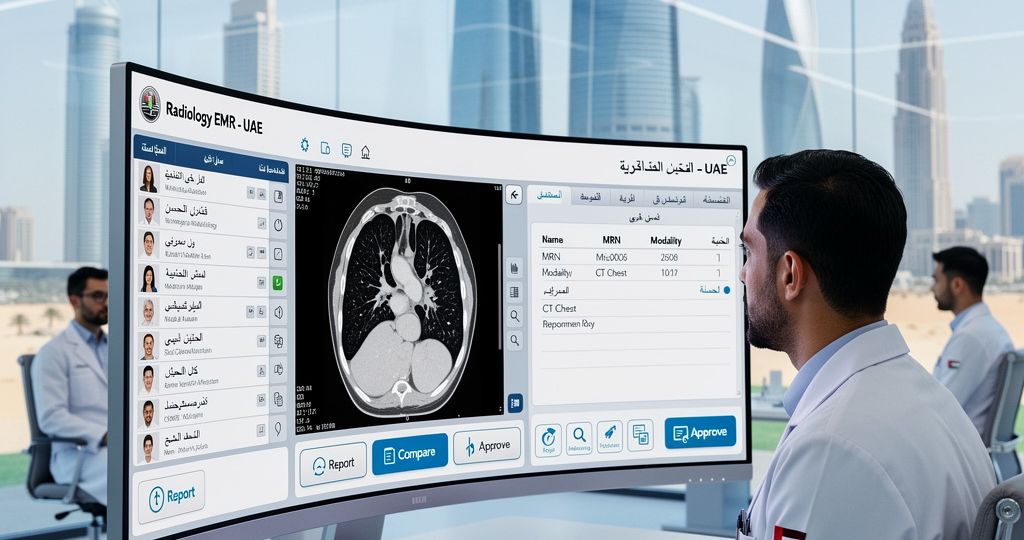
Radiology departments in UAE hospitals face growing pressure to manage patient data efficiently, deliver faster reports, and reduce errors. Radiology EMR software combines automation, AI, and cloud technology to optimize imaging workflows, helping hospitals provide faster, safer, and more precise patient care.
This guide explores its features, benefits, and how UAE hospitals can leverage these solutions for better performance.
What Is Radiology EMR Software?

Radiology EMR (Electronic Medical Record) software is designed specifically for radiology departments to manage patient records, imaging data, and reporting workflows. Unlike generic EMR systems, it focuses on imaging-centric tasks, including scans, reports, and integration with radiology devices.
How does it help UAE hospitals?
- Centralizes patient imaging records.
- Reduces manual data entry.
- Enhances communication between radiologists, technicians, and hospital management.
Who uses it?
- Radiologists and imaging technicians.
- Hospital IT and administration staff.
- Billing and insurance departments.
Radiology EMR vs. Radiology EHR
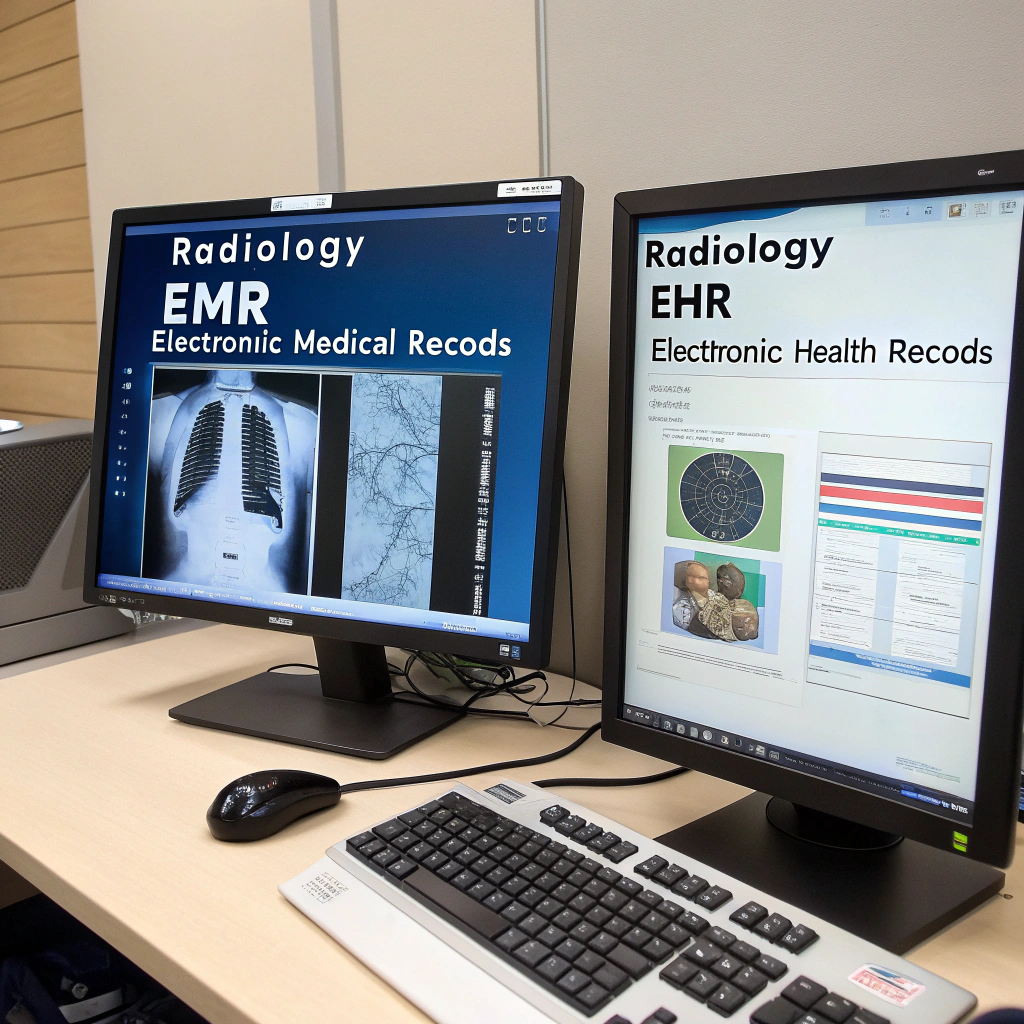
Many confuse EMR with EHR (Electronic Health Record). While both store patient data, there are critical differences:
- EMR: Focused on clinical data within a single radiology department or hospital. Ideal for workflow automation and reporting.
- EHR: Broader patient health record accessible across multiple departments or healthcare facilities.
Why UAE hospitals prefer EMR for radiology:
- Faster reporting within imaging departments.
- Seamless integration with RIS (Radiology Information System).
- Better control over radiology-specific compliance and workflows.
Core Features of Radiology EMR Software
Image Viewing, Storage, and Retrieval
Radiology EMR allows secure storage of X-rays, MRIs, and CT scans. Staff can retrieve images quickly, reducing delays in diagnosis.
Radiology Information System (RIS) Integration
Integrating EMR with RIS improves workflow efficiency by connecting scheduling, reporting, and imaging processes seamlessly.
Automated Radiology Reporting and Voice Dictation
AI-powered dictation reduces manual report writing errors, speeds up reporting time, and ensures standardized documentation.
Patient Scheduling and Workflow Automation
Automated scheduling prevents double bookings and optimizes resource utilization, allowing radiology departments to handle more patients efficiently.
Radiology Billing and Insurance Management
Integrated billing features ensure insurance claims are processed quickly, reducing delays and administrative burden.
Patient Portal
Patients can access their reports, imaging results, and appointment schedules securely online, enhancing transparency and patient satisfaction.
Artificial Intelligence (AI) and Analytics
AI helps detect anomalies, prioritize urgent cases, and provide predictive insights, improving diagnostic accuracy.
Interoperability and Compliance
Supports HL7 and DICOM standards, ensuring smooth integration with other hospital systems and compliance with UAE healthcare regulations.
Cloud-Based Access and Scalability
Cloud EMR allows remote access for radiologists, scalable storage for imaging data, and real-time collaboration across multiple facilities.
Business Intelligence and Reporting Dashboards
Dashboards provide insights into workflow efficiency, patient trends, and resource utilization, enabling better decision-making.
Key Benefits for Radiology Departments
Faster Reporting: Automated reporting reduces turnaround times for imaging results.
Improved Accuracy: AI-assisted detection lowers errors in radiology reports.
Better Patient Experience: Streamlined scheduling and patient portals improve engagement.
Optimized Resource Management: Hospitals can allocate staff and equipment more effectively.
Compliance Assurance: Built-in compliance features help UAE hospitals meet regulatory requirements.
What to Consider When Choosing a Radiology EMR
Features That Matter Most for UAE Hospitals
- RIS integration
- AI reporting
- Cloud accessibility
- Automated billing and scheduling
Vendor Support and Updates
Reliable vendor support is crucial for seamless system operation and regular updates.
Cost vs. ROI Analysis
Consider both upfront costs and long-term savings through workflow efficiency and error reduction.
The Future of Radiology EMR: Smarter, Connected, and AI-Powered
Emerging AI Applications in Radiology
- Predictive analytics for high-risk patients.
- Automated anomaly detection.
- AI-driven decision support for complex cases.
Cloud-First and Interoperable EMR Systems
Future radiology EMR will be fully cloud-enabled, ensuring multi-hospital access and seamless interoperability.
How UAE Hospitals Can Stay Ahead
- Adopt AI-driven EMR solutions early.
- Ensure staff are trained on AI and cloud workflows.
- Monitor performance with real-time dashboards for continuous improvement.
Q1: What is the best Radiology EMR software in UAE?
A1: Leading UAE hospitals prefer AI-enabled EMR solutions that integrate RIS, provide cloud access, and automate reporting.
Q2: How does EMR improve radiology reporting?
A2: EMR automates report generation, reduces errors, and speeds up turnaround times for imaging results.
Q3: Can Radiology EMR integrate with RIS?
A3: Yes, integration with RIS ensures seamless patient scheduling, imaging workflow, and reporting.
Q4: Why is AI important in radiology software?
A4: AI assists in detecting anomalies, prioritizing cases, and providing predictive insights, improving diagnostic accuracy.
Conclusion: Transforming Radiology with SBS Solutions
Radiology EMR software is transforming imaging departments in UAE hospitals. By combining automation, AI, and cloud-based access, radiologists can deliver faster, more accurate diagnoses. Hospitals adopting these solutions improve patient outcomes, optimize resources, and stay ahead in a competitive healthcare environment. healthcluster.co offers tailored solutions designed to meet UAE hospitals’ evolving needs, making radiology smarter, connected, and AI-powered.